Appearance adjectives: cómo describir el físico en inglés
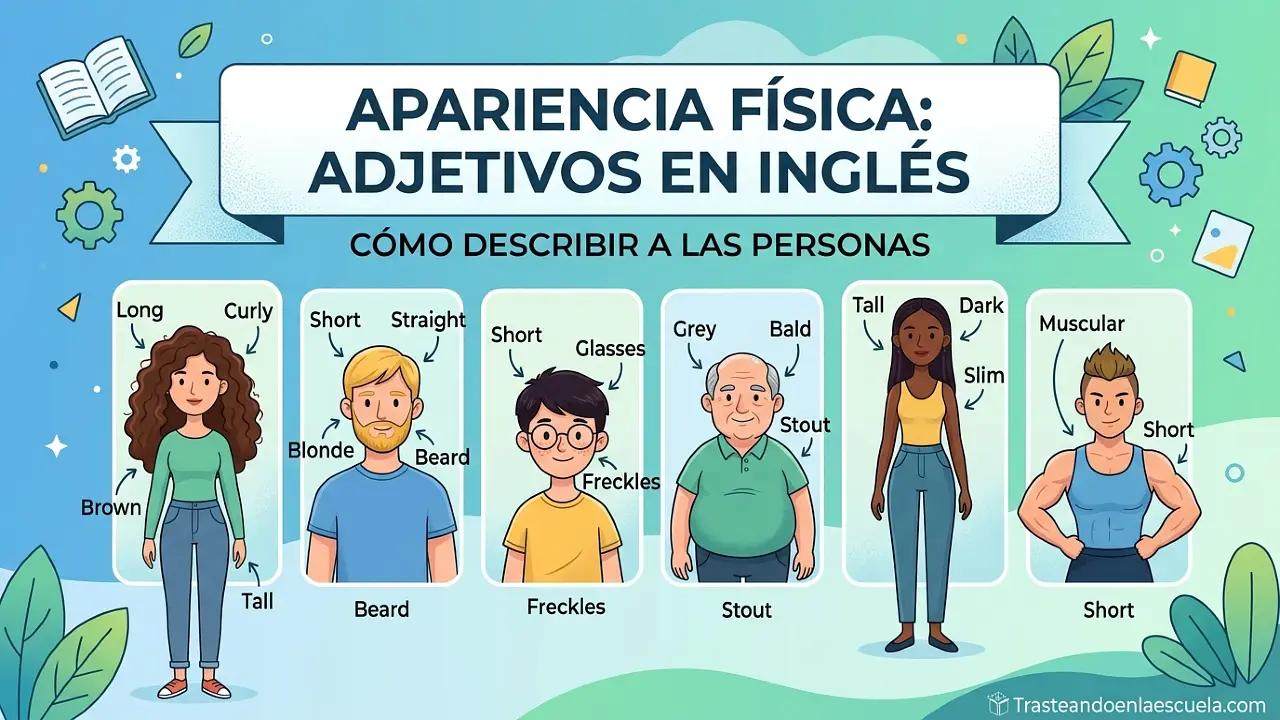
Appearance Adjectives: cómo describir el físico en inglés
¿Alguna vez has tenido que describir a alguien en inglés y no has encontrado las palabras adecuadas? Los appearance adjectives (adjetivos de apariencia) son esenciales para describir cómo es físicamente una persona: su altura, complexión, cabello, ojos, rostro y rasgos distintivos. Son imprescindibles para dar descripciones de sospechosos en una película, para hablar de tu nueva pareja o simplemente para contar cómo es tu mejor amigo.
🎯 En este post aprenderás: Los adjetivos más comunes para describir la apariencia física en inglés, organizados por categorías (altura, complexión, cabello, ojos, rostro), expresiones útiles, diferencias entre términos similares y ejercicios prácticos para describir a cualquier persona con precisión.
🔍 ¿Qué son los appearance adjectives?
📖 Definiendo la apariencia física
Los appearance adjectives describen las características físicas externas de una persona: cómo se ve a simple vista. A diferencia de los personality adjectives (que describen el carácter), estos adjetivos hablan de lo que se puede observar visualmente.
Ejemplos básicos:
- She is tall and slim. (Es alta y delgada.)
- He has short brown hair and blue eyes. (Tiene pelo corto marrón y ojos azules.)
- My grandfather is elderly and bald. (Mi abuelo es mayor y calvo.)
💡 Dato clave: Para preguntar por la apariencia física de alguien se usa «What does he/she look like?» (¿Cómo es físicamente?). No confundas con «What is he/she like?» (¿Cómo es de personalidad?), que vimos en el post sobre personalidad.
📊 Lista de appearance adjectives por categoría
1. Adjetivos de ALTURA (Height)
| Adjetivo | Significado | Ejemplo |
|---|---|---|
| Tall | Alto/a | «He is tall enough to reach the top shelf.» |
| Short | Bajo/a | «She is short, but very fast.» |
| Medium height | De estatura media | «I’m of medium height, not too tall or short.» |
| Average height | Estatura promedio | «Most people are of average height.» |
| Very tall | Muy alto | «He’s very tall, almost 2 meters.» |
| Petite | Pequeña y menuda (solo mujeres) | «She is petite and elegant.» |
2. Adjetivos de COMPLEXIÓN (Build)
| Adjetivo | Significado | Ejemplo |
|---|---|---|
| Slim | Delgado/a (estilizado) | «She has a slim figure.» |
| Thin | Delgado/a (puede ser demasiado) | «He is very thin because he doesn’t eat much.» |
| Skinny | Muy delgado/a, escuálido (a veces negativo) | «He’s too skinny; he needs to eat more.» |
| Slender | Eslendo, fino (elegante) | «She has slender arms and legs.» |
| Average build | Complexión media | «He’s of average build, not fat or thin.» |
| Athletic | Atlético/a, en forma | «He has an athletic body from playing sports.» |
| Muscular | Musculoso/a | «He goes to the gym and is very muscular.» |
| Overweight | Sobrepeso | «The doctor said I am slightly overweight.» |
| Plump | Rellenito/a, gordito/a (suave) | «She is a plump, friendly woman.» |
| Chubby | Cachetón, regordete (a menudo para niños o cariñoso) | «He was a chubby baby with rosy cheeks.» |
| Curvy | Con curvas (mujeres) | «She is proud of her curvy figure.» |
| Well-built | Bien proporcionado, fuerte | «He is well-built and strong.» |
⚠️ Nota de sensibilidad: Al describir la complexión de alguien, ten cuidado con los términos negativos. «Fat» (gordo) puede ser ofensivo. Usa «overweight» o «plump» si es necesario, pero en general, es mejor no comentar el peso de los demás a menos que sea relevante.
3. Adjetivos para el CABELLO (Hair)
🌈 Color del cabello
| Adjetivo | Significado | Ejemplo |
|---|---|---|
| Blonde / Blond | Rubio/a | «She has long blonde hair.» |
| Brunette | Moreno/a (cabello castaño) | «The brunette woman is my sister.» |
| Brown | Castaño | «He has brown hair and brown eyes.» |
| Black | Negro | «She has beautiful black hair.» |
| Red / Ginger | Pelirrojo/a | «He has red hair and freckles.» |
| Gray / Grey | Cano, gris | «My grandfather has gray hair now.» |
| White | Blanco (por edad) | «Her hair turned white with age.» |
📏 Largo del cabello
| Adjetivo | Significado | Ejemplo |
|---|---|---|
| Long | Largo | «She has long hair down to her waist.» |
| Short | Corto | «He prefers short hair.» |
| Medium-length | Largo medio | «Her hair is medium-length, just below her shoulders.» |
| Shoulder-length | A la altura de los hombros | «She has shoulder-length hair.» |
🌀 Tipo y textura del cabello
| Adjetivo | Significado | Ejemplo |
|---|---|---|
| Straight | Liso | «She has straight, shiny hair.» |
| Curly | Rizado | «He has curly brown hair.» |
| Wavy | Ondulado | «Her hair is naturally wavy.» |
| Bald | Calvo | «He started going bald in his thirties.» |
| Thick | Grueso, abundante | «She has thick, healthy hair.» |
| Thin | Fino, poco abundante | «His hair is getting thin with age.» |
4. Adjetivos para los OJOS (Eyes)
| Adjetivo | Significado | Ejemplo |
|---|---|---|
| Blue | Azules | «She has beautiful blue eyes.» |
| Brown | Marrones / Castaños | «Most people have brown eyes.» |
| Green | Verdes | «Green eyes are quite rare.» |
| Hazel | Avellana (verde/marrón mezclado) | «She has hazel eyes that change color.» |
| Gray / Grey | Grises | «He has piercing gray eyes.» |
| Dark | Oscuros | «He has dark, mysterious eyes.» |
| Big / Large | Grandes | «She has big, expressive eyes.» |
| Small | Pequeños | «He has small, narrow eyes.» |
5. Adjetivos para el ROSTRO y RASGOS (Face & Features)
| Adjetivo | Significado | Ejemplo |
|---|---|---|
| Beautiful | Hermoso/a (mujeres) | «She has a beautiful face.» |
| Handsome | Guapo (hombres) | «He is a handsome young man.» |
| Pretty | Bonito/a, lindo/a | «She is a pretty girl.» |
| Attractive | Atractivo/a | «He is very attractive.» |
| Plain | Sencillo, normal (no atractivo ni feo) | «She has a plain face, nothing special.» |
| Round | Redondo | «She has a round face.» |
| Oval | Ovalado | «An oval face is considered ideal.» |
| Square | Cuadrado | «He has a square jaw.» |
| Long | Alargado | «She has a long, narrow face.» |
| Freckles | Pecas | «She has freckles on her nose.» |
| Dimples | Hoyuelos | «He has dimples when he smiles.» |
| Beard | Barba | «He grew a beard during the pandemic.» |
| Mustache / Moustache | Bigote | «He has a thick mustache.» |
6. Adjetivos para la EDAD (Age)
| Adjetivo | Significado | Ejemplo |
|---|---|---|
| Young | Joven | «She is a young professional.» |
| Middle-aged | De mediana edad | «He is middle-aged, around 45.» |
| Elderly | Anciano, mayor | «The elderly woman needs help.» |
| Old | Viejo | «He is an old man now.» |
| Teenage | Adolescente | «She is a teenage girl.» |
| In her/his twenties/thirties, etc. | En sus veinte, treinta… | «She is in her early twenties.» |
📝 Preguntas comunes sobre apariencia física
❓ Preguntas
- What does he look like? — ¿Cómo es él físicamente?
- How tall is she? — ¿Cuánto mide ella?
- What color is her hair? — ¿De qué color es su pelo?
- Does he have a beard? — ¿Tiene barba?
- What does she look like? — ¿Cómo es ella físicamente?
💬 Posibles respuestas
- «He is tall, slim, and has short brown hair.»
- «She is about 1.70 meters tall.»
- «She has long blonde hair.»
- «Yes, he has a short beard and mustache.»
- «She is short, with curly black hair and brown eyes.»
🌍 La diferencia entre «beautiful», «pretty», «handsome» y «good-looking»
| Adjetivo | Género típico | Significado | Intensidad |
|---|---|---|---|
| Beautiful | Generalmente mujeres | Hermosa, muy atractiva | Muy fuerte |
| Pretty | Generalmente mujeres | Bonita, linda | Moderado |
| Handsome | Generalmente hombres | Guapo, apuesto | Fuerte |
| Good-looking | Ambos | Buen parecer, atractivo | Moderado |
| Attractive | Ambos | Atractivo | Moderado a fuerte |
| Cute | Ambos (a menudo niños o estilo «mono») | Mono, lindo | Suave |
💡 Diferencia clave: «Beautiful» es más fuerte y formal que «pretty». «Handsome» es exclusivamente para hombres (si dices que una mujer es handsome, significa que tiene rasgos masculinos o es muy elegante pero no es común). «Good-looking» es seguro y neutro para ambos géneros.
🧪 5 Ejercicios prácticos
Ejercicio 1: Completa la descripción
Completa con el adjetivo de apariencia adecuado.
- He goes to the gym every day. He is very ______.
- She has no hair on her head. She is ______.
- His hair is not straight or curly. It’s ______.
- She is only 1.50 meters tall. She is ______.
- He has spots of color on his face. He has ______.
✅ Ver solución
- He is very athletic / muscular.
- She is bald.
- It’s wavy.
- She is short or petite.
- He has freckles.
Ejercicio 2: Describe las siguientes personas
Usa 3-4 adjetivos para describir la apariencia física en inglés.
- Tu madre/padre
- Tu mejor amigo/a
- Una celebridad que te gusta
- Tú mismo
✅ Ver ejemplos de respuestas
- Mi madre: «My mother is of medium height, with short brown hair and brown eyes. She has a warm smile.»
- Mi mejor amigo: «My best friend is tall and slim, with curly blonde hair and blue eyes.»
- Celebridad: «Zendaya is tall, slim, with long brown hair and beautiful brown eyes.»
- Yo mismo: «I am average height, of medium build, with short black hair and brown eyes. I also wear glasses.»
Ejercicio 3: Elige el adjetivo correcto
- He is a very ______ man. (tall / short) +1.90m
- She has ______ hair. (bald / long) + hasta la cintura
- His eyes are ______. (green / curly)
- She is in her ______. (fifties / curly) + 55 años
- He has a ______ face. (beautiful / square) + mandíbula marcada
✅ Ver solución
- He is a very tall man.
- She has long hair.
- His eyes are green.
- She is in her fifties.
- He has a square face.
Ejercicio 4: Traduce al inglés
- Ella es alta y delgada.
- Él tiene ojos azules y pelo rizado.
- Mi abuela es mayor y tiene el pelo canoso.
- ¿Cómo es tu hermano físicamente?
- Ella tiene pecas y es muy bonita.
✅ Ver solución
- She is tall and slim.
- He has blue eyes and curly hair.
- My grandmother is elderly and has gray hair.
- What does your brother look like?
- She has freckles and is very pretty.
Ejercicio 5: Escribe una descripción completa
Escribe un párrafo de 5-6 líneas describiendo a una persona importante en tu vida. Usa adjetivos de altura, complexión, cabello, ojos, edad y rasgos faciales.
✅ Ver ejemplo de respuesta
Ejemplo: «My sister is in her late twenties. She is of medium height, with a slim and athletic build. She has long, wavy brown hair that she usually wears in a ponytail. Her eyes are big and green, and she has freckles on her nose. She has a round face and a beautiful smile with dimples. She is very attractive, but she doesn’t realize it. People often say she looks like a famous actress.»
📚 Clúster 46: Adjetivos básicos en inglés
Continúa aprendiendo con el resto de posts de esta serie:
- Descriptive adjectives: lista – La guía general de adjetivos descriptivos.
- Personality adjectives: cómo eres – Describe tu forma de ser.
- Appearance adjectives: físico – ¡Estás aquí!
- Size adjectives: grande, pequeño – Próximamente: todos los adjetivos de tamaño.
- Color adjectives: colores – Próximamente: la guía completa de colores.
Para seguir practicando tu inglés, visita también nuestros posts sobre falsos amigos y condicionales mixtos.
🏆 Reto de la semana: Elige una foto de familia o de un grupo de amigos y describe en inglés a cada persona de la foto usando al menos 5 adjetivos de apariencia por persona. Puedes usar frases como: «The person on the left is…» o «The woman in the red dress is…». Es una forma divertida de practicar y además crearás un álbum de fotos descrito en inglés.


Publicar comentario