El estilo indirecto en inglés: qué es y reglas básicas

Reported Speech: Cómo contar lo que alguien dijo sin comillas
¿Alguna vez has tenido que repetir lo que otra persona dijo? En inglés, puedes hacerlo de dos maneras: direct speech (discurso directo) usando comillas: John said, «I am tired», o reported speech (estilo indirecto) sin comillas: John said (that) he was tired. El reported speech es esencial para conversaciones cotidianas, noticias, entrevistas y escritos formales. En este post aprenderás las reglas básicas para dominarlo.
🎯 En este post aprenderás: Qué es el estilo indirecto, la estructura fundamental, los cambios de pronombres y referencias temporales/espaciales, cuándo usar «that», y 5 ejercicios prácticos para empezar a usar el reported speech con confianza.
🔍 ¿Qué es el Reported Speech?
🗣️ Del directo al indirecto
El reported speech (también llamado indirect speech) se utiliza para transmitir lo que alguien ha dicho sin reproducir sus palabras exactas. En lugar de comillas, cambiamos la estructura de la oración y normalmente atrasamos los tiempos verbales (aunque no siempre).
Indirecto: Maria said (that) she loved pizza.
El verbo principal que introduce la cita suele ser say o tell. Con tell siempre necesitamos un objeto (la persona a quien se dijo): Maria told me (that) she loved pizza.
💡 Pregunta clave: ¿Siempre hay que cambiar el tiempo verbal? No. Si el verbo introductorio está en presente (says, tells) o el contenido sigue siendo verdad en el momento de reportar, podemos mantener el tiempo original. Ejemplo: He says, «The Earth is round» → He says (that) the Earth is round (verdad universal).
📊 Reglas básicas: pronombres, referencias y «that»
Al convertir una oración de estilo directo a indirecto, debes ajustar tres elementos principales:
1️⃣ Cambios de pronombres y posesivos
Los pronombres personales, demostrativos y posesivos cambian según la perspectiva de quien reporta.
| En directo | En indirecto | Ejemplo directo | Ejemplo indirecto |
|---|---|---|---|
| I, me, my, mine | he, him, his / she, her, hers | «I like my car» | He said (that) he liked his car |
| we, us, our, ours | they, them, their, theirs | «We have finished our homework» | They said (that) they had finished their homework |
| you (sujeto/objeto) | I, me, he, him, she, her, we, us, they, them (según contexto) | «You look great» | She told me (that) I looked great / She told him (that) he looked great |
| this / these | that / those | «This is delicious» | He said (that) that was delicious |
2️⃣ Cambios de tiempo y lugar
Las expresiones de tiempo y lugar también se ajustan cuando la perspectiva cambia.
| En directo | En indirecto | Ejemplo directo | Ejemplo indirecto |
|---|---|---|---|
| now | then | «I am busy now» | She said (that) she was busy then |
| today | that day | «I’ll call you today» | He said (that) he would call me that day |
| yesterday | the day before / the previous day | «I saw her yesterday» | He said (that) he had seen her the day before |
| tomorrow | the next day / the following day | «We will leave tomorrow» | They said (that) they would leave the next day |
| here | there | «Come here» | She told me to go there |
| this week/month/year | that week/month/year | «I’m working this week» | He said (that) he was working that week |
3️⃣ La palabra «that»
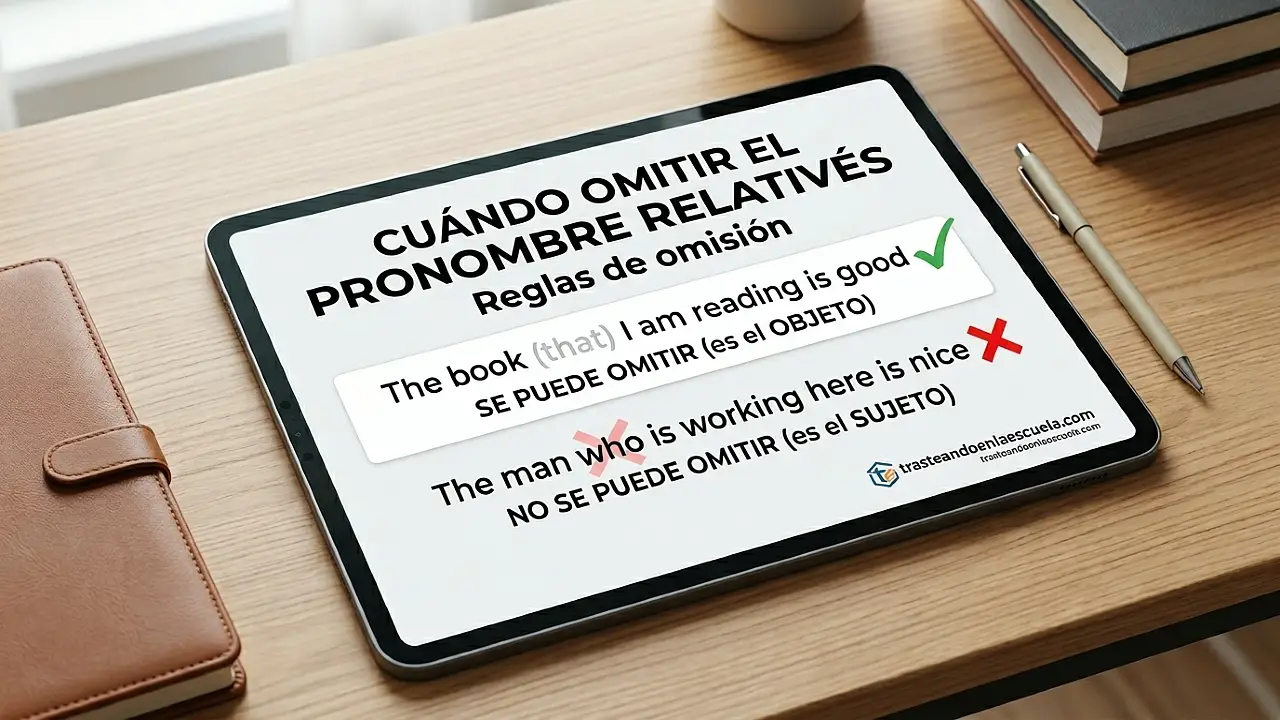
En reported speech, podemos usar that después del verbo introductorio, pero es opcional en inglés informal (especialmente en conversación). En escritos más formales, se recomienda incluirlo.
- Con say: She said (that) she was happy.
- Con tell: He told me (that) he would come.
- Con otros verbos de reporte (explain, admit, promise) también es opcional, aunque más común en estilo formal.
✍️ Ejemplo completo con múltiples cambios
Directo: «I will meet you here tomorrow,» John said to Mary.
Indirecto: John told Mary (that) he would meet her there the next day.
Análisis de cambios: I → he, will → would, you → her, here → there, tomorrow → the next day.
⚡ ¿Cuándo NO cambiamos los tiempos verbales?
Aunque más adelante veremos los cambios sistemáticos de tiempo verbal en otro post, es importante saber que en estos casos no se modifican:
- Verdades universales / hechos científicos: «The sun rises in the east» → He said that the sun rises in the east.
- Hábitos o situaciones aún verdaderas: «I live in London» → She said that she lives in London (si sigue viviendo allí). (Aunque también podemos cambiar a lived, ambas son correctas)
- Cuando el verbo introductorio está en presente: He says, «I am tired» → He says that he is tired.
- Subjuntivo o recomendaciones: «I suggest that he go» → She suggested that he go. (sin cambio)
🧪 5 Ejercicios básicos de Reported Speech
Ejercicio 1: Cambia los pronombres y posesivos
Transforma las siguientes oraciones de directo a indirecto ajustando pronombres y posesivos según el contexto. Usa «said» como verbo introductorio.
- «I love my new phone,» said Ana.
- «We are going to visit our grandparents,» said Carlos and Luis.
- «You should take your umbrella,» said Mom to me.
- «This is my favorite song,» said Laura.
- «I can’t find my keys,» said Peter.
✅ Ver solución
- Ana said (that) she loved her new phone.
- Carlos and Luis said (that) they were going to visit their grandparents.
- Mom said (that) I should take my umbrella.
- Laura said (that) that was her favorite song.
- Peter said (that) he couldn’t find his keys.
Ejercicio 2: Cambia las expresiones de tiempo y lugar
Pasa las siguientes frases a reported speech ajustando las referencias temporales y de lugar. Usa «said».
- «I will finish the report today,» said the secretary.
- «We met here two years ago,» said Tom.
- «She is arriving tomorrow morning,» said John.
- «I saw that movie yesterday,» said Lisa.
- «Please come here now,» said the teacher.
✅ Ver solución
- The secretary said (that) she would finish the report that day.
- Tom said (that) they had met there two years before / earlier.
- John said (that) she was arriving the next day / the following day in the morning.
- Lisa said (that) she had seen that movie the day before / the previous day.
- The teacher said (that) we should go there then. (O: told us to go there then – más natural)
Ejercicio 3: Usa «tell» en lugar de «say»
Convierte las siguientes oraciones usando «tell» + objeto. Recuerda que «tell» necesita la persona a quien se habla.
- «I am tired,» she said to her boss.
- «You need to study more,» the teacher said to the students.
- «We will be late,» they said to us.
- «Don’t worry,» my friend said to me.
- «I have finished the job,» he said to his colleague.
✅ Ver solución
- She told her boss (that) she was tired.
- The teacher told the students (that) they needed to study more.
- They told us (that) they would be late.
- My friend told me (that) I shouldn’t worry / not to worry (para órdenes).
- He told his colleague (that) he had finished the job.
Nota: En el caso (d) también podríamos usar «said to me», pero «told me» es más común.
Ejercicio 4: Combina pronombres, tiempo y lugar
Pasa al reported speech teniendo en cuenta todos los cambios (pronombres, tiempo, lugar, adverbios). Usa «said» o «told» según corresponda.
- Mary: «I will bring these books to you here tomorrow.»
- Dad: «We bought this house twenty years ago.»
- Assistant: «The manager is not available now, sir.»
- Lucy: «My brother came home late yesterday.»
- Guide: «You can see the castle from here today.»
✅ Ver solución
- Mary told me (that) she would bring those books to me there the next day. / Mary said (that) she would bring those books to me there the following day.
- Dad said (that) they had bought that house twenty years before / earlier.
- The assistant told the gentleman (that) the manager was not available then.
- Lucy said (that) her brother had come home late the day before / the previous day.
- The guide said (that) we could see the castle from there that day.
Ejercicio 5: Identifica errores y corrige
Algunas de estas frases en reported speech tienen errores. Corrígelas.
- He said me that he was happy.
- She said that she will come to the party.
- They told that they had finished.
- John said me, «I am tired.» (convierte a indirecto correctamente)
- Mother said to us that we must go there now. (el original en directo era: «You must go here now»)
✅ Ver solución
- Error: «said me» no es correcto. Corrección: He told me that he was happy. / He said that he was happy.
- Error: «will» debería cambiar a «would» si el verbo introductorio está en pasado. Corrección: She said that she would come to the party.
- Error: «told» necesita objeto. Corrección: They told us / me / him (that) they had finished. / They said (that) they had finished.
- Error: «said me» otra vez. Corrección: John told me (that) he was tired. / John said to me (that) he was tired.
- Error: «now» debería ser «then» en indirecto. Corrección: Mother told us (that) we had to go there then. / Mother said to us (that) we had to go there then.
❌ Errores comunes en las reglas básicas
| Error | Causa | Corrección |
|---|---|---|
| Olvidar cambiar los pronombres | Traducción literal del español | Siempre pregúntate: ¿quién habla y a quién? |
| Usar «say» sin objeto cuando se necesita «tell» | Confundir say y tell | Tell + persona, say + (that) + frase |
| Mantener «here», «now», «yesterday» igual | No ajustar la perspectiva | Imagina que estás reportando desde otro lugar y otro día |
| Poner «that» donde suena mal | Creer que siempre es obligatorio | Es opcional en inglés informal, pero no incorrecto |
🌍 Aplicaciones reales del reported speech
📰 En noticias y periodismo
- Los periodistas usan reported speech para citar declaraciones: The president said that the economy was improving.
💼 En el trabajo
- Reportar lo que dijo un jefe o compañero: Anna told me that the meeting had been moved to Friday.
📚 En clase
- Contar lo que el profesor explicó: The teacher said that we had to submit the project by next week.
📖 Glosario básico
| Término | Definición |
|---|---|
| Direct speech | Discurso directo: reproducir palabras exactas entre comillas. |
| Reported / Indirect speech | Estilo indirecto: contar lo dicho sin comillas, con ajustes. |
| Reporting verb | Verbo introductorio (say, tell, ask, explain, etc.). |
| Backshift | Desplazamiento hacia atrás de los tiempos verbales (lo veremos en el siguiente post). |
📚 Sigue aprendiendo sobre Reported Speech
Esta es la base. Ahora profundiza en los siguientes temas:
- Cambios de tiempo verbal en el Reported Speech – Aprende el backshift.
- Reported Speech con preguntas y órdenes – Cómo reportar preguntas y mandatos.
- Verbos de reporte más usados: say, tell, ask, warn – Domina los verbos clave.
- Ejercicios de Reported Speech resueltos – Practica todo lo aprendido.
📝 Reto para casa: Escucha una conversación en inglés (puede ser de una serie o podcast) y anota tres frases en estilo directo. Luego, escríbelas en reported speech cambiando pronombres y referencias temporales. ¡Verás cómo interiorizas las reglas!










Publicar comentario