Personality adjectives: cómo describir tu carácter en inglés
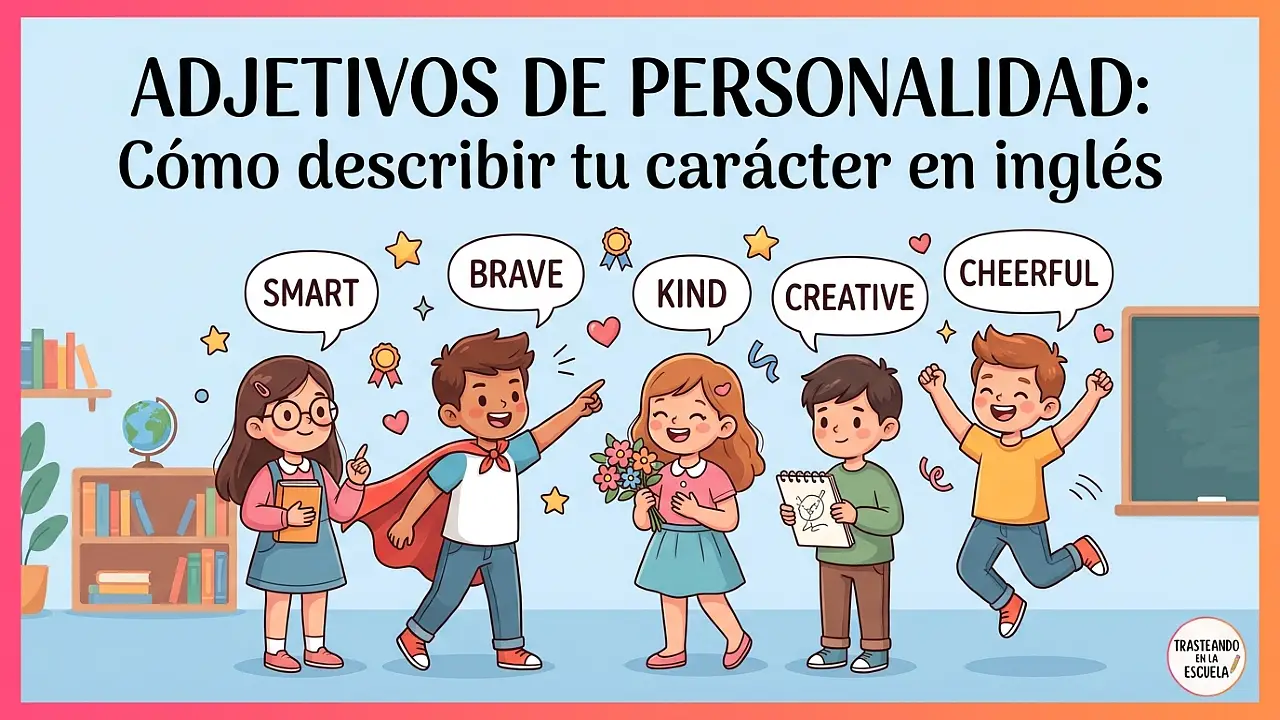
Personality Adjectives: cómo describir tu forma de ser en inglés
¿Eres extrovertido o tímido? ¿Optimista o pesimista? ¿Trabajador o perezoso? Los personality adjectives (adjetivos de personalidad) son las palabras que necesitas para hablar de tu carácter y el de los demás. Son esenciales para presentarte en entrevistas, describir a tus amigos, hablar de tu familia o incluso para ligar en situaciones sociales. Dominarlos te ayudará a expresar quién eres realmente en inglés.
🎯 En este post aprenderás: Los adjetivos de personalidad más comunes divididos en positivos y negativos, cómo describirte a ti mismo y a los demás, expresiones útidas para entrevistas de trabajo, sinónimos y antónimos, y ejercicios prácticos para que puedas hablar de tu carácter con confianza.
🔍 ¿Qué son los personality adjectives?
📖 Definiendo el carácter
Los personality adjectives describen las características internas de una persona: cómo piensa, siente y se comporta. A diferencia de los appearance adjectives (que describen el físico), estos adjetivos hablan de la personalidad, el temperamento y el comportamiento habitual.
Ejemplos básicos:
- She is friendly and outgoing. (Es amigable y extrovertida.)
- He is shy and quiet. (Es tímido y callado.)
- My brother is very funny. (Mi hermano es muy divertido.)
- My mother is patient and kind. (Mi madre es paciente y amable.)
💡 Dato clave: En inglés, para preguntar por la personalidad de alguien se usa «What is he/she like?» (¿Cómo es él/ella?). No confundas con «What does he/she look like?» (¿Cómo es físicamente?), que vimos en el post sobre apariencia física.
📊 Lista de personality adjectives positivos
😊 Adjetivos positivos (los que a todos nos gusta escuchar)
| Adjetivo | Significado | Ejemplo |
|---|---|---|
| Friendly | Amigable, simpático | «She is very friendly to everyone.» |
| Kind | Amable, bondadoso | «He helped me with my bags. He’s so kind.» |
| Nice | Agradable, simpático | «She is a really nice person.» |
| Polite | Educado, cortés | «Always say please and thank you to be polite.» |
| Honest | Honesto, sincero | «I appreciate your honest opinion.» |
| Generous | Generoso | «He donated a lot of money. He’s very generous.» |
| Helpful | Servicial, útil | «The staff at the hotel was very helpful.» |
| Patient | Paciente | «Teaching children requires being patient.» |
| Optimistic | Optimista | «She always sees the bright side. She’s optimistic.» |
| Confident | Seguro de sí mismo | «He spoke with a confident voice.» |
| Outgoing | Extrovertido, sociable | «She loves meeting new people. She’s outgoing.» |
| Funny | Divertido, gracioso | «He tells great jokes. He’s very funny.» |
| Intelligent | Inteligente | «She solved the problem quickly. She’s intelligent.» |
| Smart | Listo, inteligente | «That was a smart decision.» |
| Creative | Creativo | «She writes amazing stories. She’s very creative.» |
| Responsible | Responsable | «You can trust him with important tasks. He’s responsible.» |
| Hardworking | Trabajador, aplicado | «She never gives up. She’s hardworking.» |
| Reliable | Con fiable, fiable | «He always keeps his promises. He’s reliable.» |
| Calm | Tranquilo, sereno | «She stayed calm during the emergency.» |
| Wise | Sabio | «My grandfather gives great advice. He’s very wise.» |
📝 Nota: En inglés británico, «polite» y «well-mannered» son muy valorados. No olvides usar «please», «thank you», «sorry» y «excuse me» para parecer una persona educada.
📊 Lista de personality adjectives negativos
😞 Adjetivos negativos (para describir defectos)
| Adjetivo | Significado | Ejemplo |
|---|---|---|
| Rude | Grosero, maleducado | «He didn’t say thank you. That was rude.» |
| Mean | Malvado, mezquino | «She said horrible things. She can be mean.» |
| Selfish | Egoísta | «He only thinks about himself. He’s selfish.» |
| Lazy | Perezoso, vago | «He never does his chores. He’s so lazy.» |
| Dishonest | Deshonesto | «He lied about his qualifications. He’s dishonest.» |
| Impatient | Impaciente | «She can’t wait for anything. She’s impatient.» |
| Pessimistic | Pesimista | «He always expects the worst. He’s pessimistic.» |
| Insecure | Inseguro | «She constantly doubts herself. She’s insecure.» |
| Shy | Tímido | «He finds it hard to talk to new people. He’s shy.» |
| Quiet | Callado, reservado | «She doesn’t speak much. She’s very quiet.» |
| Boring | Aburrido | «He never has anything interesting to say. He’s boring.» |
| Arrogant | Arrogante | «He thinks he’s better than everyone. He’s arrogant.» |
🔄 Adjetivos para describirte a ti mismo (autoevaluación)
🗣️ En una entrevista de trabajo
Cuando te preguntan «How would you describe yourself?» (¿Cómo te describirías?), puedes usar estos adjetivos:
- «I am a hardworking and responsible person.» (Soy una persona trabajadora y responsable.)
- «I am creative and enthusiastic about new challenges.» (Soy creativo y entusiasta ante nuevos desafíos.)
- «I consider myself organized and detail-oriented.» (Me considero organizado y orientado a los detalles.)
- «I am a team player and reliable.» (Soy un jugador de equipo y fiable.)
🗣️ En una conversación casual
- «I’m pretty easy-going.» (Soy bastante tranquilo / de trato fácil.)
- «I can be a bit shy at first.» (Puedo ser un poco tímido al principio.)
- «I’m optimistic most of the time.» (Soy optimista la mayor parte del tiempo.)
- «I’m funny once you get to know me.» (Soy divertido una vez que me conoces.)
📝 Preguntas comunes sobre personalidad
❓ Preguntas
- What is he like? — ¿Cómo es él? (personalidad)
- What kind of person is she? — ¿Qué tipo de persona es ella?
- How would you describe your best friend? — ¿Cómo describirías a tu mejor amigo?
- What are your best qualities? — ¿Cuáles son tus mejores cualidades?
- What are your weaknesses? — ¿Cuáles son tus debilidades?
💬 Posibles respuestas
- «He is kind, funny, and a bit shy.»
- «She is very outgoing and confident.»
- «My best friend is loyal, honest, and supportive.»
- «I am hardworking and creative.»
- «I can sometimes be impatient or disorganized.»
🎯 Sinónimos y matices importantes
📚 Palabras que no son exactamente iguales
| Adjetivo | Matiz / Diferencia |
|---|---|
| Shy vs Introverted | Shy = tímido (con ansiedad social). Introverted = introvertido (prefiere la soledad, no necesariamente ansioso). |
| Funny vs Fun | Funny = gracioso (hace reír). Fun = divertido (es agradable estar con él/ella). |
| Confident vs Arrogant | Confident = seguro de sí (positivo). Arrogant = arrogante (cree que es mejor que los demás). |
| Stubborn vs Determined | Stubborn = terco (negativo). Determined = determinado (positivo). |
💡 Diferencia clave: «My brother is fun» significa que es divertido estar con él. «My brother is funny» significa que cuenta chistes y hace reír. ¡No son lo mismo!
🌟 Expresiones útiles con personality adjectives
- «He’s a people person.» — Le gusta estar con gente (extrovertido).
- «She’s a night owl.» — Es nocturna (no un adjetivo de personalidad puro, pero describe hábitos).
- «He’s an early bird.» — Es madrugador.
- «She has a heart of gold.» — Tiene un corazón de oro (es muy buena persona).
- «He’s as stubborn as a mule.» — Es terco como una mula.
- «She’s always the life of the party.» — Siempre es el alma de la fiesta (muy extrovertida y divertida).
⚖️ Escala de intensidad
📈 De menos a más (en personalidad positiva)
Friendly: friendly → warm → affectionate → loving
Intelligent: smart → intelligent → brilliant → genius
Funny: amusing → funny → hilarious → hysterical
📉 De menos a más (en personalidad negativa)
Rude: impolite → rude → disrespectful → offensive
Selfish: self-centered → selfish → egotistical → narcissistic
🧪 5 Ejercicios prácticos
Ejercicio 1: Positivo o negativo?
Clasifica cada adjetivo como positivo (P) o negativo (N).
- Friendly
- Lazy
- Arrogant
- Generous
- Stubborn
- Reliable
- Jealous
- Optimistic
✅ Ver solución
- Friendly → Positivo (P)
- Lazy → Negativo (N)
- Arrogant → Negativo (N)
- Generous → Positivo (P)
- Stubborn → Negativo (N) (aunque a veces se usa como «determinado», normalmente es negativo)
- Reliable → Positivo (P)
- Jealous → Negativo (N)
- Optimistic → Positivo (P)
Ejercicio 2: Completa con el adjetivo correcto
Elige de la lista: shy, hardworking, polite, patient, rude, honest, generous, moody
- She always says «please» and «thank you». She is very ______.
- He never lies. He is very ______.
- She doesn’t like talking to new people. She is ______.
- He works 12 hours a day. He is extremely ______.
- She donated all her money to charity. She is ______.
- You never know if he’ll be happy or angry. He’s so ______.
- He interrupted me and didn’t apologize. That was ______.
- She waited for two hours without complaining. She is very ______.
✅ Ver solución
- She is very polite.
- He is very honest.
- She is shy.
- He is extremely hardworking.
- She is generous.
- He’s so moody.
- That was rude.
- She is very patient.
Ejercicio 3: Describe a estas personas
Usa 2-3 adjetivos de personalidad para describir:
- Tu mejor amigo/a
- Tu madre o padre
- Un compañero de trabajo o clase que te cae mal
- Tú mismo (cómo eres realmente)
- Un personaje de una película o serie
✅ Ver ejemplos de respuestas
- Mi mejor amigo: «He is loyal, funny and supportive.»
- Mi madre: «My mother is kind, patient and hardworking.»
- Compañero que me cae mal: «He is arrogant, selfish and rude.»
- Yo mismo: «I am shy at first, but then I’m friendly and funny.»
- Personaje: «Harry Potter is brave, loyal and determined.»
Ejercicio 4: Elige el antónimo correcto
Empareja cada adjetivo con su antónimo.
| 1. Friendly | A. Dishonest |
| 2. Honest | B. Lazy |
| 3. Hardworking | C. Rude |
| 4. Patient | D. Pessimistic |
| 5. Optimistic | E. Impatient |
| 6. Generous | F. Shy |
| 7. Outgoing | G. Selfish |
✅ Ver solución
- Friendly → C. Rude
- Honest → A. Dishonest
- Hardworking → B. Lazy
- Patient → E. Impatient
- Optimistic → D. Pessimistic
- Generous → G. Selfish
- Outgoing → F. Shy
Ejercicio 5: Escribe un pequeño párrafo
Describe a una persona importante en tu vida usando al menos 6 personality adjectives. Explica por qué es así.
✅ Ver ejemplo de respuesta
Ejemplo: «My grandmother is the most kind and patient person I know. She is always generous with her time and listens to everyone’s problems. She is also very optimistic; she always sees the good side of every situation. Although she is a bit shy in large groups, she is incredibly warm and loving with her family. I admire her wise advice and her calm nature. She never gets angry or moody. That’s why everyone loves her.»
📚 Clúster 46: Adjetivos básicos en inglés
Continúa aprendiendo con el resto de posts de esta serie:
- Descriptive adjectives: lista – La guía general de adjetivos descriptivos.
- Personality adjectives: cómo eres – ¡Estás aquí!
- Appearance adjectives: físico – Describe la apariencia física.
- Size adjectives: grande, pequeño – Todos los adjetivos de tamaño.
- Color adjectives: colores – La guía completa de colores.
Para seguir practicando tu inglés, visita también nuestros posts sobre mixed conditionals y falsos amigos en inglés.
🏆 Reto de la semana: Escribe un breve perfil de ti mismo en inglés usando 5 adjetivos de personalidad positivos y 2 que consideres «áreas de mejora» (weaknesses). Luego, pide a un amigo o familiar que te describa con 5 adjetivos y compara. ¿Coinciden tus percepciones? Es una forma estupenda de aprender adjetivos y conocerte mejor.






Publicar comentario