Ejercicios Present Perfect con soluciones (PDF descargable)
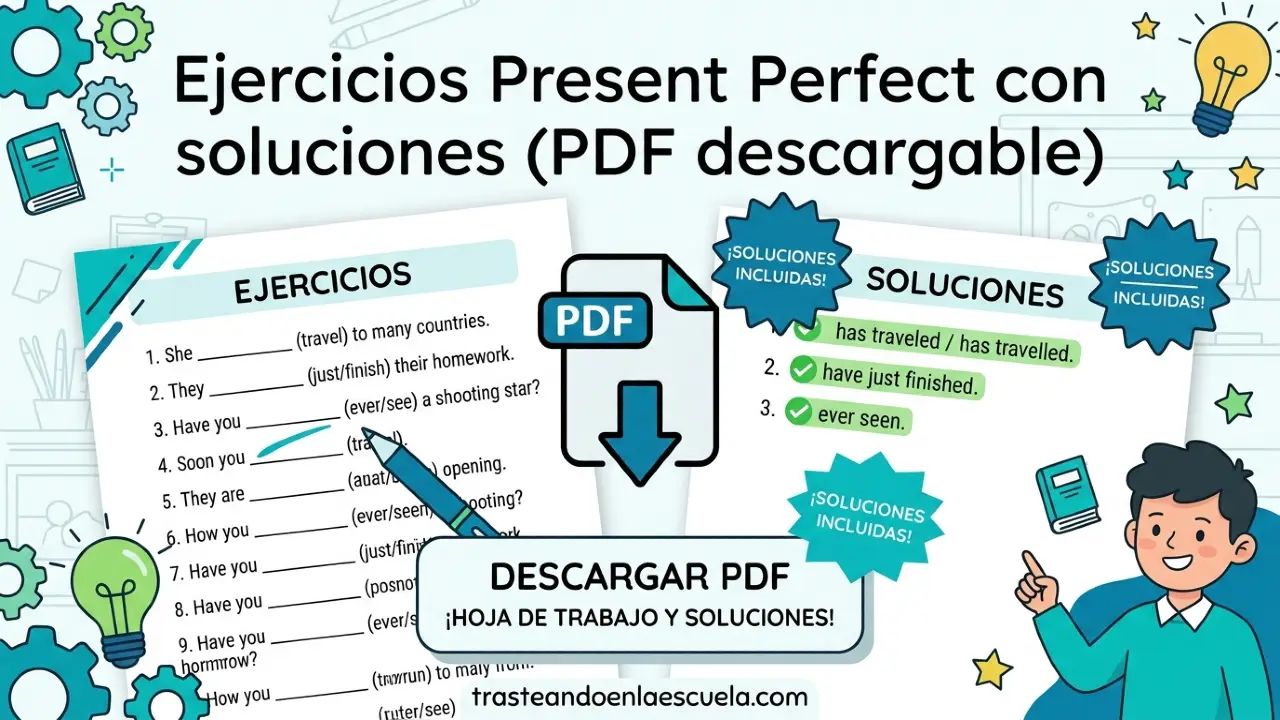
50 Ejercicios de Present Perfect con soluciones
La teoría está muy bien, pero el inglés se aprende practicando. Por eso hemos preparado esta mega-guía con 50 ejercicios de Present Perfect para que pongas a prueba todo lo que has aprendido. Desde la estructura básica hasta la difícil elección entre Present Perfect y Past Simple.
🎯 En este post encontrarás: 5 bloques de 10 ejercicios cada uno, cubriendo todos los aspectos del Present Perfect (estructura, for/since, already/yet, ever/never y vs Past Simple). Todas las respuestas están explicadas para que entiendas tus errores.
📥 Descarga el PDF para imprimir
¿Prefieres practicar en papel? Descarga todos estos ejercicios en un PDF listo para imprimir.
⬇️ DESCARGAR PDF (50 EJERCICIOS)(Simulado. En un sitio real, aquí iría el enlace al PDF)
📝 Bloque 1: Estructura básica (have/has + participio)
Ejercicio 1.1: Completa con have o has.
- I __________ finished my work.
- She __________ gone to the store.
- They __________ arrived early.
- He __________ never been to London.
- We __________ seen that movie before.
✅ Ver soluciones
- I have finished my work.
- She has gone to the store.
- They have arrived early.
- He has never been to London.
- We have seen that movie before.
Ejercicio 1.2: Escribe la forma negativa (contracción).
- I have eaten lunch. (-) ________________________________
- She has arrived. (-) ________________________________
- They have finished. (-) ________________________________
- He has called me. (-) ________________________________
- We have seen the film. (-) ________________________________
✅ Ver soluciones
- I haven’t eaten lunch.
- She hasn’t arrived.
- They haven’t finished.
- He hasn’t called me.
- We haven’t seen the film.
Ejercicio 1.3: Escribe la forma interrogativa.
- I have finished. (?) ________________________________
- She has arrived. (?) ________________________________
- They have been to Paris. (?) ________________________________
- He has eaten sushi. (?) ________________________________
- We have seen the movie. (?) ________________________________
✅ Ver soluciones
- Have you finished?
- Has she arrived?
- Have they been to Paris?
- Has he eaten sushi?
- Have you seen the movie? (o Have we seen the movie?)
Ejercicio 1.4: Escribe el participio correcto.
- I have __________ (see) that film.
- She has __________ (eat) all the cake.
- They have __________ (go) home.
- He has __________ (write) a book.
- We have __________ (drink) all the water.
✅ Ver soluciones
- I have seen that film.
- She has eaten all the cake.
- They have gone home.
- He has written a book.
- We have drunk all the water.
Ejercicio 1.5: Corrige los errores.
- She have gone home. ________________________________
- I has seen that movie. ________________________________
- They haven’t went to school. ________________________________
- Has you ever been to London? ________________________________
- He have never ate sushi. ________________________________
✅ Ver soluciones
- She has gone home.
- I have seen that movie.
- They haven’t gone to school.
- Have you ever been to London?
- He has never eaten sushi.
📝 Bloque 2: For y Since
Ejercicio 2.1: Completa con for o since.
- I have lived here __________ 2010.
- She has been waiting __________ two hours.
- They have known each other __________ they were children.
- We haven’t seen him __________ last week.
- He has worked at this company __________ five years.
✅ Ver soluciones
- I have lived here since 2010.
- She has been waiting for two hours.
- They have known each other since they were children.
- We haven’t seen him since last week.
- He has worked at this company for five years.
Ejercicio 2.2: Responde a las preguntas usando for o since.
- How long have you been a teacher? (2009) ________________________________
- How long has she lived in Madrid? (ten years) ________________________________
- How long have they been married? (last June) ________________________________
- How long have you known him? (we were kids) ________________________________
- How long has it been raining? (this morning) ________________________________
✅ Ver soluciones
- I have been a teacher since 2009.
- She has lived in Madrid for ten years.
- They have been married since last June.
- I have known him since we were kids.
- It has been raining since this morning.
Ejercicio 2.3: Elige la opción correcta.
- I haven’t seen him since / for a long time.
- She has worked here since / for 2018.
- We have been friends since / for we were in college.
- They have been on vacation since / for two weeks.
- He has been asleep since / for 3 pm.
✅ Ver soluciones
- I haven’t seen him for a long time.
- She has worked here since 2018.
- We have been friends since we were in college.
- They have been on vacation for two weeks.
- He has been asleep since 3 pm.
📝 Bloque 3: Already y Yet
Ejercicio 3.1: Completa con already o yet.
- Have you finished your homework __________?
- I’ve __________ seen that movie. It’s great.
- She hasn’t called me __________.
- They have __________ arrived. They’re here!
- Has the train left __________?
✅ Ver soluciones
- Have you finished your homework yet?
- I’ve already seen that movie. It’s great.
- She hasn’t called me yet.
- They have already arrived. They’re here!
- Has the train left yet?
Ejercicio 3.2: Reescribe las frases incluyendo already o yet.
- I have eaten. (already) ________________________________
- She hasn’t arrived. (yet) ________________________________
- Have you finished? (yet) ________________________________
- They have left. (already) ________________________________
- We haven’t seen the film. (yet) ________________________________
✅ Ver soluciones
- I have already eaten. / I’ve eaten already.
- She hasn’t arrived yet.
- Have you finished yet?
- They have already left. / They’ve left already.
- We haven’t seen the film yet.
Ejercicio 3.3: Traduce las frases.
- ¿Ya has comido? – Sí, ya he comido.
- Ella todavía no ha llegado.
- Ya he hecho mis deberes.
- ¿Ha llamado él ya?
- No, todavía no ha llamado.
✅ Ver soluciones
- Have you eaten yet? – Yes, I’ve already eaten.
- She hasn’t arrived yet.
- I’ve already done my homework.
- Has he called yet?
- No, he hasn’t called yet. / Not yet.
📝 Bloque 4: Ever y Never
Ejercicio 4.1: Completa con ever o never.
- Have you __________ been to Japan?
- I have __________ tried sushi. I don’t like fish.
- She has __________ seen that movie. She wants to watch it.
- Is this the best pizza you have __________ eaten?
- They have __________ traveled abroad. They are scared of flying.
✅ Ver soluciones
- Have you ever been to Japan?
- I have never tried sushi. I don’t like fish.
- She has never seen that movie. She wants to watch it.
- Is this the best pizza you have ever eaten?
- They have never traveled abroad. They are scared of flying.
Ejercicio 4.2: Responde a las preguntas usando ever/never.
- Have you ever been to Paris? (No) ________________________________
- Has she ever tried Mexican food? (Yes) ________________________________
- Have they ever seen a ghost? (No) ________________________________
- Is that the most beautiful place you have ever visited? (Yes) ________________________________
- Has he ever driven a car? (No) ________________________________
✅ Ver soluciones
- No, I have never been to Paris.
- Yes, she has ever tried Mexican food. (O más natural: Yes, she has tried it.)
- No, they have never seen a ghost.
- Yes, it is the most beautiful place I have ever visited.
- No, he has never driven a car.
Ejercicio 4.3: Elige la opción correcta.
- This is the first time I have ever / never flown in a plane.
- She has ever / never eaten snails. She’s very adventurous!
- Have you ever / never seen the Northern Lights?
- I have ever / never met a celebrity. I’d love to.
- He has ever / never told a lie. He’s very honest.
✅ Ver soluciones
- This is the first time I have ever flown in a plane.
- She has never eaten snails. She’s very adventurous! (Cuidado: «Adventurous» significa que le gusta probar cosas, así que nunca ha comido caracoles, quiere probarlos).
- Have you ever seen the Northern Lights?
- I have never met a celebrity. I’d love to.
- He has never told a lie. He’s very honest.
📝 Bloque 5: Present Perfect vs. Past Simple
Ejercicio 5.1: Completa con la forma correcta (Present Perfect o Past Simple).
- I __________ (see) that movie last night.
- She __________ (never / eat) Mexican food.
- They __________ (buy) a new car two months ago.
- We __________ (be) friends since we were children.
- He __________ (just / finish) his homework.
- __________ you __________ (go) to the party last Saturday?
- I __________ (not / call) him yet.
- She __________ (live) in London for five years, but now she lives in Paris.
- I __________ (lose) my keys! I can’t find them anywhere.
- He __________ (break) his leg when he was skiing.
✅ Ver soluciones
- I saw that movie last night. (last night = pasado concreto)
- She has never eaten Mexican food. (experiencia de vida)
- They bought a new car two months ago. (ago = pasado concreto)
- We have been friends since we were children. (since + acción que continúa)
- He has just finished his homework. (just = noticia reciente)
- Did you go to the party last Saturday? (pasado concreto)
- I haven’t called him yet. (yet = conexión con presente)
- She lived in London for five years. (ya no vive allí, la acción terminó)
- I have lost my keys! (resultado presente: no las tengo)
- He broke his leg when he was skiing. (acción terminada en el pasado, se especifica cuándo)
Ejercicio 5.2: Elige la opción correcta.
- I have visited / visited my grandmother last weekend.
- She has never been / never went to Australia.
- They have lived / lived here since 2015.
- He has just left / just left the office.
- We didn’t see / haven’t seen that movie yet.
- When have you arrived / did you arrive?
- I have read / read three books this week.
- She has been / was to Paris three times.
- He has worked / worked at the company for 20 years before he retired.
- I have known / knew him since we were kids.
✅ Ver soluciones
- I visited my grandmother last weekend. (last weekend)
- She has never been to Australia. (experiencia)
- They have lived here since 2015. (since + acción que continúa)
- He has just left the office. (just)
- We haven’t seen that movie yet. (yet)
- When did you arrive? (pregunta por un momento específico)
- I have read three books this week. (esta semana aún no termina)
- She has been to Paris three times. (experiencia)
- He worked at the company for 20 years before he retired. (acción terminada, ya no trabaja)
- I have known him since we were kids. (know es un verbo de estado, acción que continúa)
📚 Serie completa: Present Perfect
- Present Perfect: guía completa – Repasa la teoría si has fallado muchos.
- Present Perfect vs Past Simple – Para dudas con el Bloque 5.
- Present Perfect Continuous: usos y estructura – Para ir un paso más allá.
- For, Since, Already, Yet, Ever, Never – Para dudas con los Bloques 2, 3 y 4.
- Ejercicios present perfect con soluciones – ¡Estás aquí!
🎯 Evalúa tu resultado:
- 45-50 aciertos: ¡Eres un experto! Puedes pasar a temas más avanzados como el Present Perfect Continuous.
- 35-44 aciertos: Muy bien, pero repasa los bloques donde hayas fallado. La práctica hace al maestro.
- 25-34 aciertos: Necesitas repasar la teoría. Vuelve a la guía completa y concéntrate en los usos y la diferencia con el Past Simple.
- Menos de 25: No te desanimes. El Present Perfect es difícil al principio. Vuelve a estudiar la estructura básica y haz los ejercicios de nuevo en unos días.



Publicar comentario