Verbs for sports: verbos para hablar de deportes en inglés
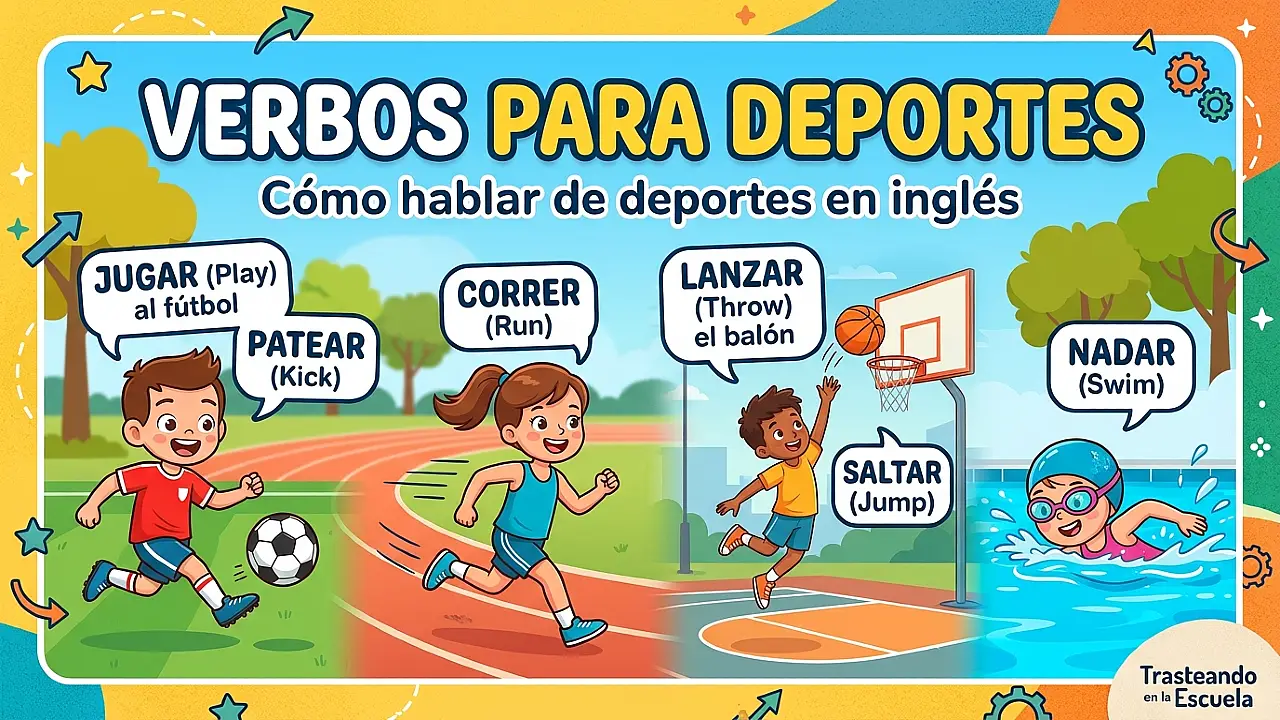
Verbs for sports: La guía definitiva de verbos deportivos
¿Sabes la diferencia entre play, do y go? ¿Y entre kick, hit y strike? Para hablar de deportes en inglés no basta con conocer los nombres de los deportes; necesitas dominar los verbos que los acompañan. Este post te enseñará todos los verbos esenciales para describir acciones deportivas, desde los más básicos hasta los más específicos.
🎯 En este post aprenderás: Los verbos clave para hablar de deportes (play, do, go, run, swim, jump), verbos específicos por tipo de deporte (kick, throw, catch, hit, serve), las preposiciones que los acompañan, y muchos ejemplos y ejercicios prácticos.
🔍 La gran clasificación: Play, Do y Go
📋 Los 3 verbos básicos que debes dominar
Como ya vimos en el post de deportes en inglés, esta es la base fundamental. Repasemos la regla con más detalle:
⚽ PLAY
¿Cuándo usarlo? Deportes de equipo, con pelota o juegos de competición.
Estructura: play + sport
- play soccer / football
- play basketball
- play tennis
- play chess
- play video games
🏃 DO
¿Cuándo usarlo? Deportes individuales, actividades de combate o ejercicios.
Estructura: do + sport/activity
- do athletics / track and field
- do gymnastics
- do karate / judo
- do yoga
- do exercise
🏊 GO
¿Cuándo usarlo? Deportes que terminan en -ING (actividades en movimiento).
Estructura: go + verb-ING
- go swimming
- go running
- go cycling
- go hiking
- go fishing
💡 Truco definitivo: Si el deporte se puede jugar CON una pelota → PLAY. Si termina en -ING y te mueves → GO. Si es un arte marcial o ejercicio individual → DO.
🏃 Verbos de movimiento básicos
Correr y desplazarse (Running & Moving)
| Verbo | Significado | Ejemplo |
|---|---|---|
| Run | Correr | I run 5 kilometers every morning. |
| Jog | Trotar (ritmo lento) | She jogs in the park at sunset. |
| Sprint | Correr a máxima velocidad | He sprinted to the finish line. |
| Walk | Caminar | We walk our dog after dinner. |
| Hike | Hacer senderismo | They hiked through the mountains. |
| Swim | Nadar | She swims 50 laps every day. |
| Dive | Bucear / Zambullirse | He dove into the pool from the platform. |
| Jump | Saltar | The athlete jumped 2.5 meters. |
Lanzar y golpear (Throwing & Hitting)
| Verbo | Significado | Deporte típico |
|---|---|---|
| Throw | Lanzar | Béisbol, baloncesto, fútbol americano |
| Kick | Patear | Fútbol, rugby |
| Hit | Golpear | Tenis, béisbol, golf |
| Catch | Atrapar | Béisbol, fútbol americano, críquet |
| Pass | Pasar | Fútbol, baloncesto, rugby |
| Shoot | Disparar / Tirar | Baloncesto, fútbol, hockey |
| Strike | Golpear (con fuerza) | Béisbol, boxeo |
| Serve | Sacar | Tenis, voleibol, pádel |
Acciones específicas por deporte
| Verbo | Significado | Deporte |
|---|---|---|
| Dribble | Botar / Regatear | Baloncesto, fútbol |
| Tackle | Entrar / Placaje | Fútbol americano, rugby |
| Head (the ball) | Rematar de cabeza | Fútbol |
| Pitch | Lanzar (el lanzador) | Béisbol |
| Bat | Batear | Béisbol, críquet |
| Row | Remar | Remo |
| Pedal | Pedalear | Ciclismo |
| Stretch | Estirarse | Yoga, calentamiento |
⚽ Verbos específicos por deporte (vocabulario avanzado)
⚽ Fútbol (Soccer)
- Kick – patear (to kick the ball into the net)
- Pass – pasar (to pass the ball to a teammate)
- Shoot – disparar / tirar a gol (to shoot from outside the box)
- Dribble – regatear (to dribble past defenders)
- Head – cabecear (to head the ball into the goal)
- Tackle – entrar / placar (to tackle the opponent)
- Save – parar (the goalkeeper saves the shot)
- Score – marcar / anotar (to score a goal)
🏀 Baloncesto (Basketball)
- Dribble – botar (to dribble down the court)
- Shoot – tirar (to shoot from the three-point line)
- Pass – pasar (to pass the ball to the point guard)
- Rebound – rebotear (to rebound the missed shot)
- Block – bloquear (to block the opponent’s shot)
- Dunk – machacar / clavar (to dunk the ball)
- Lay up – bandeja (to make a lay up)
- Free throw – tiro libre (to shoot a free throw)
🎾 Tenis (Tennis)
- Serve – sacar (to serve the ball)
- Hit – golpear (to hit a forehand/backhand)
- Return – devolver (to return the serve)
- Volley – volear (to volley at the net)
- Smash – rematar (to smash the ball)
- Lob – globo (to lob the ball over the opponent)
- Slice – cortar (to slice the ball with backspin)
- Rally – intercambiar golpes (to rally from the baseline)
🏊 Natación (Swimming)
- Swim – nadar (to swim freestyle)
- Glide – deslizarse (to glide through the water)
- Breathe – respirar (to breathe every three strokes)
- Flip turn – vuelta (to do a flip turn at the wall)
- Kick – patalear (to kick with a kickboard)
- Pull – tirar del agua (to pull with your arms)
- Dive – zambullirse (to dive from the starting block)
🥊 Boxeo (Boxing)
- Punch – golpear / dar un puñetazo (to punch the heavy bag)
- Jab – directo de izquierda (to throw a quick jab)
- Hook – gancho (to land a left hook)
- Uppercut – uppercut (to finish with an uppercut)
- Dodge – esquivar (to dodge the opponent’s punch)
- Block – bloquear (to block with your gloves)
- Knock out (KO) – noquear (to knock out the opponent)
🗣️ Phrasal verbs útiles para deportes
Los phrasal verbs son muy comunes en inglés deportivo. Aquí tienes los más importantes:
| Phrasal verb | Significado | Ejemplo |
|---|---|---|
| Warm up | Calentar | We need to warm up before the match. |
| Cool down | Enfriar / estirar al final | Don’t forget to cool down after running. |
| Work out | Entrenar / hacer ejercicio | I work out at the gym three times a week. |
| Take up | Empezar un deporte nuevo | I decided to take up swimming. |
| Give up | Dejar / rendirse | Never give up, even when it’s hard. |
| Keep up | Mantener el ritmo | I can’t keep up with the professional runners. |
| Sign up | Apuntarse / inscribirse | I signed up for a yoga class. |
| Show up | Presentarse / aparecer | Only ten players showed up for practice. |
📝 Conjugación de verbos deportivos importantes
Verb tables: los verbos irregulares más comunes en deportes
| Verbo (base form) | Past Simple | Past Participle | Significado |
|---|---|---|---|
| Run | ran | run | correr |
| Swim | swam | swum | nadar |
| Throw | threw | thrown | lanzar |
| Catch | caught | caught | atrapar |
| Kick | kicked | kicked | patear (regular) |
| Hit | hit | hit | golpear |
| Shoot | shot | shot | disparar / tirar |
| Dive | dived / dove (US) | dived | zambullirse |
| Ride | rode | ridden | montar (bici) |
🗣️ Diálogos de ejemplo
💬 Diálogo 1: Antes de un partido de fútbol
Coach: Alright team, let’s warm up before the match. Start with some light jogging. (Vamos equipo, calentemos antes del partido. Empezad con un trote suave.)
Player 1: Coach, should we practice passing and shooting? (Entrenador, ¿deberíamos practicar pases y tiros?)
Coach: Yes, after stretching. Remember to communicate and work as a team. (Sí, después de estirar. Recordad comunicaros y trabajar en equipo.)
Player 2: I’ll try to score a goal today! (¡Intentaré marcar un gol hoy!)
💬 Diálogo 2: En el gimnasio
Alex: How often do you work out? (¿Con qué frecuencia entrenas?)
Jamie: I go to the gym five times a week. I usually run on the treadmill for 20 minutes and then lift weights. (Voy al gimnasio cinco veces a la semana. Normalmente corro en la cinta 20 minutos y luego levanto pesas.)
Alex: That’s impressive. Do you also do any other sports? (Es impresionante. ¿Practicas algún otro deporte?)
Jamie: Yes, I go swimming on weekends. I love doing different activities. (Sí, voy a nadar los fines de semana. Me encanta hacer diferentes actividades.)
💬 Diálogo 3: Hablando de un partido de tenis
Maria: Did you watch the tennis match yesterday? (¿Viste el partido de tenis ayer?)
Tom: Yes! The champion served incredibly well. She hit 15 aces. (¡Sí! La campeona sacó increíblemente bien. Golpeó 15 aces.)
Maria: I know. Her volleys were also amazing. She didn’t miss a single shot at the net. (Lo sé. Sus voleas también fueron increíbles. No falló ni un solo golpe en la red.)
🧪 5 Ejercicios prácticos para dominar los verbos deportivos
Ejercicio 1: Elige el verbo correcto (Play, Do o Go)
Completa cada oración con play / do / go.
- I want to _______ swimming this summer.
- My brother _______ basketball every Saturday.
- She _______ yoga to relax after work.
- We _______ hiking in the mountains last weekend.
- They _______ athletics at the national level.
- Do you know how to _______ chess?
- Let’s _______ cycling tomorrow morning.
- He has _______ karate since he was a child.
✅ Ver solución
- go swimming
- plays basketball
- does yoga
- went hiking (past tense of go)
- do athletics
- play chess
- go cycling
- done karate
Ejercicio 2: Elige el verbo de acción específico
Completa con el verbo adecuado: kick / throw / catch / shoot / serve / hit / dribble / tackle
- In soccer, you can’t _______ the ball with your hands.
- The basketball player _______ the ball from the three-point line.
- The goalkeeper _______ the ball and prevented a goal.
- In tennis, you must _______ the ball into the service box.
- The baseball player _______ the ball with his bat.
- He _______ the ball to his teammate perfectly.
- She _______ past three defenders before scoring.
- The rugby player _______ the opponent to stop him.
✅ Ver solución
- kick (En fútbol no se puede tocar con las manos)
- shot (disparó/tiró)
- caught (atrapó)
- serve (sacar)
- hit (golpeó)
- passed (pasó)
- dribbled (regateó / botó)
- tackled (entró / placó)
Ejercicio 3: Traduce al inglés
- Corro 10 kilómetros todos los días.
- El jugador pateó la pelota dentro de la red.
- ¿Sabes nadar? Yo aprendí de niño.
- El portero atrapó el balón con seguridad.
- Vamos a calentar antes del partido.
- Nunca te rindas, sigue intentándolo.
- Me apunté a una clase de pádel la semana pasada.
✅ Ver solución
- I run 10 kilometers every day.
- The player kicked the ball into the net.
- Can you swim? I learned as a child.
- The goalkeeper caught the ball safely.
- Let’s warm up before the match.
- Never give up, keep trying.
- I signed up for a padel class last week.
Ejercicio 4: Completa el diálogo
Completa con los verbos adecuados del recuadro.
Verbos: play, go, do, run, hit, serve, warm up, score
Anna: Do you want to _______ tennis with me this afternoon?
Mark: Sure! But I need to _______ first. I don’t want to get injured.
Anna: Of course. Let’s meet at the court at 3 PM. I’ll bring the rackets and balls.
Mark: Great. I’ve been practicing my _______. I can now _______ the ball very fast.
Anna: Awesome! I hope I can _______ at least one point against you!
✅ Ver solución
Anna: Do you want to play tennis with me this afternoon?
Mark: Sure! But I need to warm up first. I don’t want to get injured.
Anna: Of course. Let’s meet at the court at 3 PM. I’ll bring the rackets and balls.
Mark: Great. I’ve been practicing my serve. I can now hit the ball very fast.
Anna: Awesome! I hope I can score at least one point against you!
Ejercicio 5: Escribe oraciones usando estos verbos
Escribe una oración original en inglés usando cada uno de estos verbos en contexto deportivo.
- to throw
- to catch
- to kick
- to shoot
- to dribble
- to serve
- to tackle
✅ Ver ejemplos de respuesta
- The quarterback threw the ball 50 yards down the field.
- The fielder caught the ball for the final out.
- The soccer player kicked the ball into the top corner.
- He shot the basketball from downtown and scored three points.
- She dribbled past two defenders and passed to her teammate.
- He served an ace that the opponent couldn’t return.
- The defender tackled the striker just outside the box.
❌ Errores comunes con verbos deportivos
| Error | Ejemplo incorrecto | Corrección |
|---|---|---|
| Usar «make» en lugar de «do» | I make yoga | I do yoga |
| Usar «play» con deportes -ING | I play swimming | I go swimming |
| Confundir «kick» y «hit» | He hit the ball with his foot | He kicked the ball with his foot |
| Usar «throw» en tenis | She threw the ball in tennis | She served the ball / She hit the ball |
| Decir «I practice football» | I practice football | I play football (practice es entrenar, no jugar) |
| Olvidar el objeto después del verbo | He kicked. (¿qué?) | He kicked the ball |
📖 Glosario de verbos deportivos
| English | Español | Deporte(s) |
|---|---|---|
| To compete | Competir | Todos |
| To train | Entrenar | Todos |
| To practice | Practicar | Todos |
| To win | Ganar | Todos |
| To lose | Perder | Todos |
| To tie / draw | ,\]Empatar | Fútbol, baloncesto, tenis |
| To defeat | Derrotar | Todos |
| To celebrate | Celebrar | Todos |
📚 Serie completa: Deportes y hobbies en inglés
Este post es parte de una serie sobre vocabulario de deportes y tiempo libre. No te pierdas el resto:
- Sports: deportes en inglés – Vocabulario completo de deportes.
- Hobbies: pasatiempos en inglés – Todo sobre aficiones.
- Sports equipment: equipamiento deportivo – El nombre de cada objeto deportivo.
- Verbs for sports: jugar, correr, nadar – ¡Estás aquí! Los verbos esenciales.
- Fitness and gym: vocabulario de gimnasio – Rutinas, máquinas y ejercicios.
🏆 Reto final: Comenta un partido en inglés
Para terminar, te propongo un reto divertido: Mira un partido de cualquier deporte (puede ser en TV o YouTube) y describe las acciones en voz alta en inglés. Usa todos los verbos que has aprendido:
«He shoots! He scores! The goalkeeper couldn’t save it. What a great pass from the midfielder! The striker kicked it perfectly into the top corner. Now the defender is dribbling past two players…»
Bonus: Hazlo con un amigo que también esté aprendiendo inglés. Comentad el partido juntos y turnaos para describir las jugadas. ¡Es la mejor práctica de speaking deportivo!







Publicar comentario