Verbos estáticos (stative verbs) que no se usan en continuous
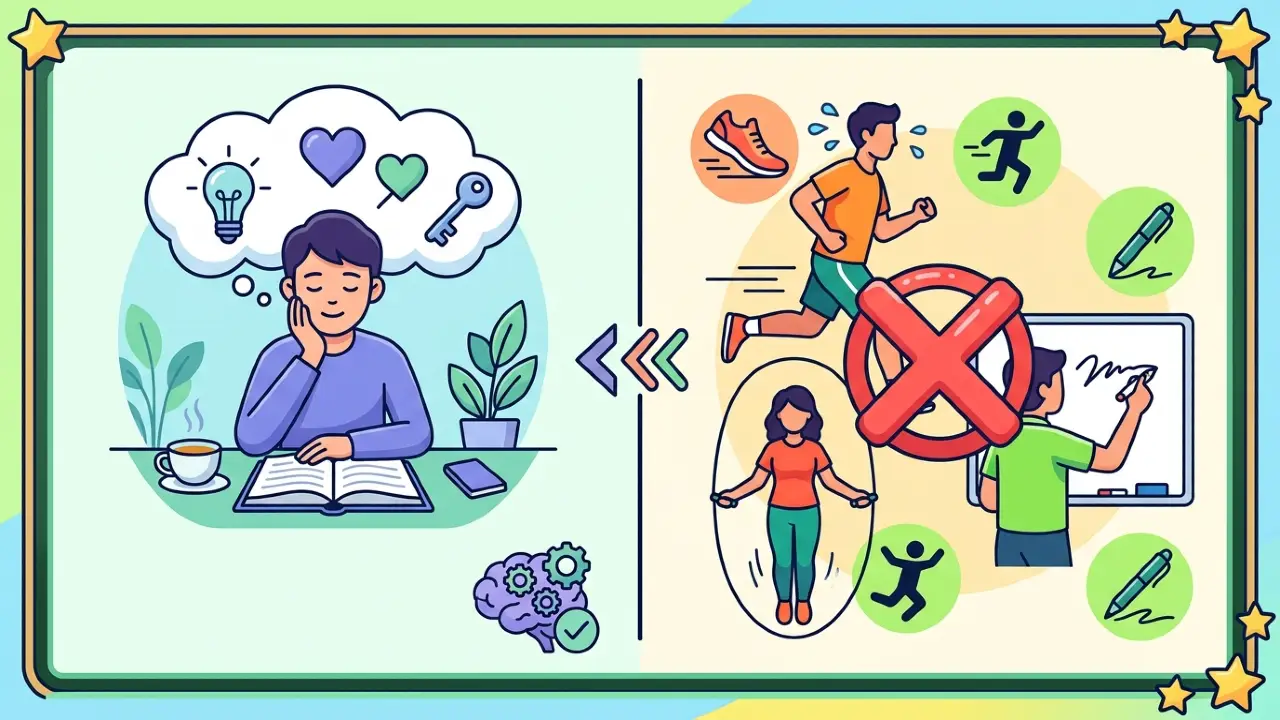
Verbos Estáticos: Cuando la acción no es una acción
¿Por qué podemos decir «I want a coffee» pero no «I am wanting a coffee»? La respuesta está en los stative verbs o verbos estáticos. Estos verbos describen estados (pensamientos, emociones, posesiones) y no acciones en progreso, por lo que no se utilizan en los tiempos continuos (-ing).
🎯 En este post aprenderás: Qué son los verbos estáticos, las 4 categorías principales con listas completas, ejemplos de su uso correcto, y los casos especiales donde algunos verbos pueden ser estáticos O dinámicos según su significado.
🔍 ¿Qué son los verbos estáticos?
💭 Estado vs Acción
La mayoría de los verbos en inglés son dinámicos (action verbs). Describen una acción física o actividad que tiene un inicio y un final: run, eat, play, write. Estos verbos pueden usarse en continuous (I am running).
Los verbos estáticos (stative verbs), por el contrario, describen un estado o condición que es estático o que no cambia fácilmente: pensar, creer, poseer, gustar. Como son estados y no acciones, generalmente no se usan en los tiempos continuos (como el present continuous o past continuous).
✅ I know the answer. (Correcto)
📚 Lista de verbos estáticos por categorías
Vamos a agruparlos para que sea más fácil recordarlos.
1. Verbos de opinión y pensamiento (Mental State)
- Believe (creer) – I believe you.
- Think (pensar/opinar)* – I think it’s a good idea.
- Know (saber/conocer) – She knows the truth.
- Understand (entender) – Do you understand the question?
- Doubt (dudar) – I doubt he’ll come.
- Remember (recordar) – I remember our first date.
- Forget (olvidar) – He forgets names easily.
- Mean (significar) – What does this word mean?
- Realize (darse cuenta) – I realize it’s difficult.
- Suppose (suponer) – I suppose you’re right.
2. Verbos de emoción y sentimiento (Emotions)
- Love (amar/encantar) – They love chocolate.
- Like (gustar) – She likes classical music.
- Hate (odiar) – I hate getting up early.
- Prefer (preferir) – He prefers tea to coffee.
- Dislike (disgustar) – I dislike waiting in lines.
- Adore (adorar) – We adore our grandparents.
- Care (importar/preocuparse) – She cares about the environment.
- Fear (temer) – They fear the dark.
- Envy (envidiar) – I envy your talent.
- Hope (esperar) – We hope you’re okay.
3. Verbos de posesión (Possession)
- Have (tener/poseer)* – He has a big house.
- Own (poseer) – They own a restaurant.
- Belong to (pertenecer a) – This book belongs to me.
- Possess (poseer) – She possesses great skill.
- Include (incluir) – The price includes tax.
- Contain (contener) – The box contains jewellery.
4. Verbos de los sentidos (Senses)
- See (ver)* – I see a bird in the tree.
- Hear (oír) – Can you hear that noise?
- Smell (oler)* – The flowers smell nice.
- Taste (saber/gustar)* – This soup tastes delicious.
- Feel (sentir)* – The fabric feels soft.
- Look (parecer)* – You look tired.
- Sound (sonar) – That sounds like a good plan.
- Appear (parecer) – He appears to be calm.
- Seem (parecer) – She seems happy.
5. Otros estados
- Be (ser/estar) – She is a doctor. (generalmente)
- Need (necesitar) – I need some water.
- Want (querer) – He wants to travel.
- Desire (desear) – We desire peace.
- Weigh (pesar)* – The suitcase weighs 20 kilos.
- Measure (medir)* – The table measures 2 metres.
- Cost (costar) – How much does it cost?
- Owe (deber dinero) – I owe him €10.
*Estos verbos pueden tener un uso dinámico diferente. Lo veremos más abajo.
⚠️ Verbos con doble personalidad
Algunos verbos de la lista pueden ser estáticos (con un significado) o dinámicos (con otro significado diferente). Cuando son dinámicos, ¡sí pueden usarse en continuous!
| Verbo | Uso Estático (No -ing) | Uso Dinámico (Sí -ing) |
|---|---|---|
| Think | Opinión: I think it’s a good film. (Creo que es una buena película). | Proceso mental: I am thinking about the problem. (Estoy pensando en el problema). |
| Have | Posesión: She has a car. (Ella tiene un coche). | Acción (como expresión fija): She is having a shower / breakfast. (Se está duchando / desayunando). |
| See | Sentido de la vista: I see a cloud. (Veo una nube). | Quedar / Visitar: I am seeing the doctor tomorrow. (Voy a ver al médico mañana). |
| Smell / Taste | Sentido (el objeto tiene una cualidad): The soup tastes good. (La sopa sabe bien). | Acción de oler/probar: I am tasting the soup to check the salt. (Estoy probando la sopa). |
| Feel | El objeto tiene una cualidad: The cloth feels soft. (La tela se siente suave). | Acción de sentir o estado temporal de salud: I am feeling tired today. (Me siento cansado hoy). |
| Look | Parecer: You look great! (¡Te ves genial!). | Acción de mirar: I am looking at the painting. (Estoy mirando el cuadro). |
| Be | Estado permanente/característica: He is rude. (Él es maleducado – es su personalidad). | Comportamiento temporal (con adjetivo): He is being rude today. (Él está siendo maleducado hoy – no es lo normal). |
🧠 Ejercicios prácticos
Ejercicio 1: ¿Estático o Dinámico? Elige la forma correcta
- I __________ (know / am knowing) the answer.
- She __________ (is tasting / tastes) the soup to see if it needs salt.
- This coffee __________ (is tasting / tastes) bitter.
- We __________ (are having / have) a party next Saturday.
- They __________ (don’t understand / aren’t understanding) the lesson.
✅ Ver soluciones
- know (I know the answer.)
- is tasting (She is tasting the soup to see if it needs salt.)
- tastes (This coffee tastes bitter.)
- are having (We are having a party next Saturday.)
- don’t understand (They don’t understand the lesson.)
Ejercicio 2: Completa con el verbo en la forma correcta (simple o continuous)
- I can’t talk now. I __________ (see) the dentist.
- He __________ (have) a new phone. It’s great.
- Why __________ (you / look) at me like that?
- You __________ (be) very selfish today. What’s wrong?
- This bag __________ (weigh) a lot. How much is it?
✅ Ver soluciones
- I am seeing the dentist. (dinámico: visita)
- He has a new phone. (estático: posesión)
- Why are you looking at me like that? (dinámico: mirar)
- You are being very selfish today. (dinámico: comportamiento temporal)
- This bag weighs a lot. (estático: propiedad)
Ejercicio 3: Corrige los errores en estas frases
- I am wanting to go to the cinema.
- She is believing in ghosts.
- Are you hearing that noise?
- This cake is tasting delicious.
- He is needing some help right now.
✅ Ver soluciones
- I want to go to the cinema.
- She believes in ghosts.
- Do you hear that noise?
- This cake tastes delicious.
- He needs some help right now.
Ejercicio 4: Diferencia de significado. Explica la diferencia.
- a) She is very quiet. / b) She is being very quiet.
- a) I think he’s right. / b) I am thinking about my holidays.
✅ Ver explicación
- a) She is very quiet. (Ella es callada, es su personalidad). b) She is being very quiet. (Ella está siendo callada ahora, pero no es lo habitual).
- a) I think he’s right. (Opino que tiene razón). b) I am thinking about my holidays. (Estoy reflexionando sobre mis vacaciones).
📖 Glosario de términos clave
| Término | Definición |
|---|---|
| Stative Verb (Verbo estático) | Verbo que describe un estado, no una acción. No se usa en tiempos continuos. |
| Dynamic Verb (Verbo dinámico) | Verbo que describe una acción. Puede usarse en tiempos continuos. |
| Estado | Una condición que existe, como una opinión, emoción o posesión. |
| Verbos de sentidos | Verbos como see, hear, smell, que describen la percepción involuntaria. |
📚 Serie completa: Present Simple & Continuous
- Present Simple: usos, reglas y 100 ejemplos – Post 1
- Present Continuous: cómo y cuándo usarlo – Post 2
- Present Simple vs Present Continuous: diferencias clave – Post 3
- Verbos estáticos (stative verbs) que no se usan en continuous – ¡Estás aquí!
- Ejercicios present simple y continuous con soluciones – Post 5
💡 Truco para recordarlos: Si el verbo expresa algo que no puedes ver hacer a alguien (como «pensar», «querer» o «poseer»), es muy probable que sea un verbo estático. No puedes ver a alguien «poseyendo» un coche, solo lo tienes.





Publicar comentario