Get by, get away, get back: sobrevive, escapa y regresa
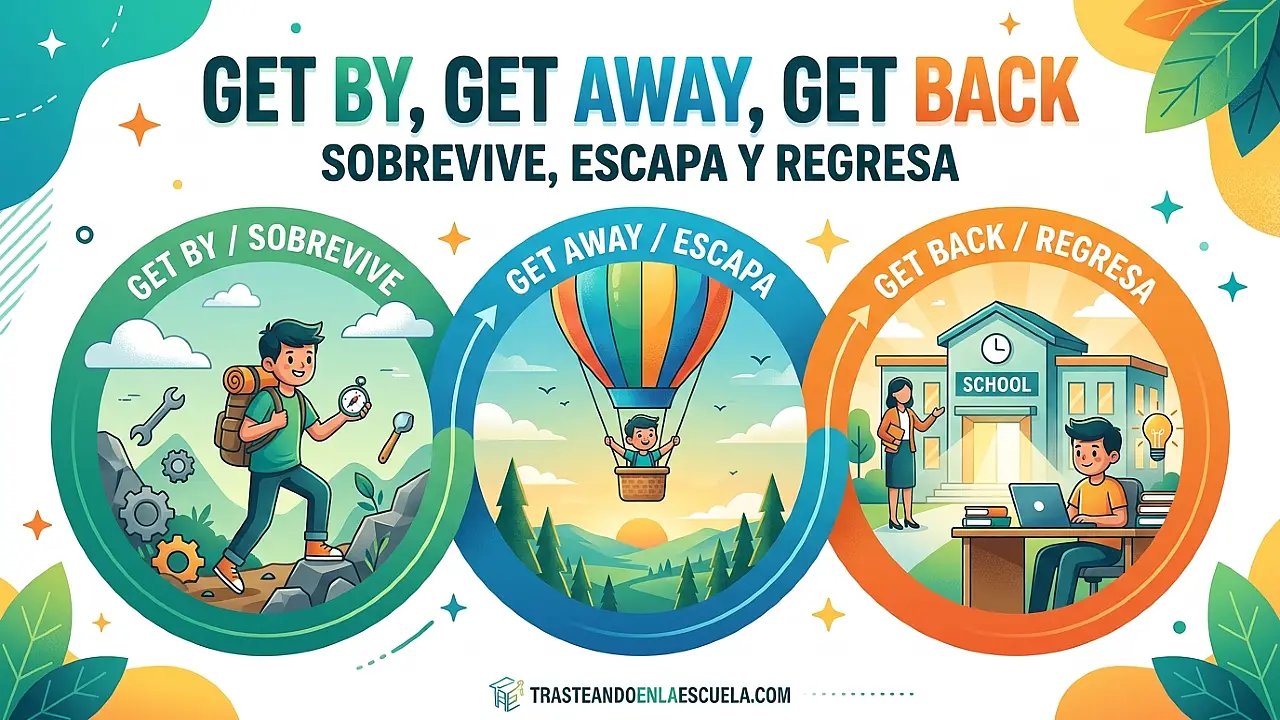
Get by, away & back: Tu kit de supervivencia en inglés
Hay situaciones para las que necesitas palabras específicas: arreglártelas con poco dinero (get by), escapar de la rutina (get away) o volver a casa (get back). Estos tres phrasal verbs son indispensables para hablar de finanzas, viajes y movimiento en general.
🎯 En este post aprenderás: Los significados de get by, get away y get back, sus usos en contextos cotidianos, y cómo diferenciarlos para no cometer errores.
💰 Get by: Arreglárselas con lo justo
🪙 Get by = Arreglárselas / Sobrevivir (económicamente) / Ir tirando
Este verbo es perfecto para hablar de situaciones donde tienes lo mínimo necesario para seguir adelante, especialmente con dinero o habilidades lingüísticas.
📌 Con dinero: «It’s hard to get by on a minimum wage.» (Es difícil arreglárselas con un salario mínimo).
📌 Con idiomas: «My French is basic, but I can get by.» (Mi francés es básico, pero puedo defenderme).
📌 Con recursos: «We can get by with just one car.» (Podemos arreglárnoslas con solo un coche).
💬 Ejemplos prácticos:
- «With the rising prices, many families struggle to get by.» → Con el aumento de precios, muchas familias luchan por llegar a fin de mes.
- «I don’t need a luxury car; a small one will help me get by.» → No necesito un coche de lujo; uno pequeño me ayudará a apañarme.
- «She speaks enough English to get by on holiday.» → Habla suficiente inglés para defenderse de vacaciones.
- «We don’t have much, but we get by.» → No tenemos mucho, pero vamos tirando.
🧠 Truco: Piensa que tienes que pasar por un espacio muy estrecho (by). No te sobra nada, pero justo, justo, pasas. «Get by» es sobrevivir sin lujos.
✈️ Get away: Escapar (de la rutina o de la ley)
🏝️ Get away = Escapar / Irse de vacaciones / Huir
Este verbo tiene dos caras: la positiva (tomarse unas vacaciones para escapar de la rutina) y la negativa (huir de un lugar o de la justicia).
📌 Vacaciones: «We’re hoping to get away to the beach this weekend.» (Esperamos escapar a la playa este fin de semana).
📌 Huir (físicamente): «The thief got away in a black car.» (El ladrón huyó en un coche negro).
📌 Librarse (castigo): «He committed the crime and got away with it.» (Cometió el crimen y se libró).
💬 Ejemplos para cada uso:
- Vacaciones: «I need to get away from the city for a while.» → Necesito escapar de la ciudad por un tiempo.
- Huir: «The prisoners got away through a tunnel.» → Los prisioneros escaparon por un túnel.
- Librarse (get away with): «You won’t get away with cheating on the test.» → No te librarás de tu castigo por copiar en el examen.
- Como nombre (a getaway): «We’re planning a romantic getaway to Paris.» → Estamos planeando una escapada romántica a París.
🧠 Truco: «Away» implica distancia. Puedes alejarte (get away) de la oficina para irte de vacaciones, o alejarte de la policía si eres un ladrón. La intención es la misma: estar lejos.
🔙 Get back: Regresar y recuperar
🏠 Get back = Regresar / Volver / Recuperar
Es uno de los phrasal verbs más usados. Puede significar volver a un lugar, a una situación anterior, o recuperar algo que te quitaron.
📌 Regresar a un lugar: «What time did you get back home last night?» (¿A qué hora volviste a casa anoche?).
📌 Recuperar algo: «I need to get back the book I lent her.» (Necesito recuperar el libro que le presté).
📌 Vengarse (get back at): «She got back at him for lying.» (Se vengó de él por mentir).
📌 Continuar (get back to): «I’ll get back to you with an answer soon.» (Te responderé pronto).
💬 Ejemplos en acción:
- «We got back from our trip late last night.» → Regresamos de nuestro viaje anoche tarde.
- «I can’t wait to get back to work after the holidays.» → No puedo esperar a volver al trabajo después de las vacaciones.
- «I finally got my phone back from the repair shop.» → Finalmente recuperé mi teléfono del taller de reparación.
- «He insulted me, but I’ll get back at him somehow.» → Me insultó, pero me vengaré de alguna manera.
- «I’ll get back to you on that question tomorrow.» → Te responderé a esa pregunta mañana.
🧠 Truco: «Back» siempre indica retorno. Puedes volver (back) a casa, recuperar (back) un objeto (traerlo de vuelta a ti), o devolver (back) una llamada o mensaje.
⚔️ Diferencia entre Get back y otros verbos
🔙 GET BACK
- Regresar (tú mismo): «I got back home.»
- Recuperar algo: «I got my money back.»
- Responder: «I’ll get back to you.»
- Vengarse: «Get back at someone.»
↩️ RETURN / COME BACK
- Return: Más formal. «He returned to Spain.»
- Come back: Similar a get back, pero desde la perspectiva del hablante. «Come back home!» (¡Vuelve a casa!).
- Go back: Regresar a un lugar donde ya estuviste. «I want to go back to Italy.»
📌 Para más matices sobre preposiciones de movimiento, repasa nuestro post sobre Get in vs Get into.
📊 Tabla resumen
| Phrasal Verb | Significado Principal | Ejemplo | Traducción |
|---|---|---|---|
| Get by | Arreglárselas, ir tirando | I get by on a small salary. | Me las arreglo con un sueldo pequeño. |
| Get away | Escapar, irse de vacaciones | We got away to the mountains. | Nos escapamos a la montaña. |
| Get away with | Librarse de un castigo | He got away with the crime. | Se libró del crimen. |
| Get back | Regresar, recuperar | I got back late. | Regresé tarde. |
| Get back to | Responder, contactar de nuevo | I’ll get back to you. | Te respondo/contacto luego. |
| Get back at | Vengarse | She got back at him. | Ella se vengó de él. |
🧠 Ejercicios prácticos
Ejercicio 1: Elige la opción correcta
- With this inflation, it’s hard to (get by / get away / get back).
- The robbers (got by / got away / got back) in a stolen car.
- What time did you (get by / get away / get back) from the party?
- I can (get by / get away) in Spanish, but I’m not fluent.
- We’re planning to (get by / get away) for a long weekend in May.
✅ Ver soluciones
- get by (Arreglárselas económicamente)
- got away (Huyeron)
- get back (Regresar)
- get by (Defenderse en un idioma)
- get away (Escaparse de vacaciones)
Ejercicio 2: Completa con la preposición correcta (by, away, back)
- I need to get _____ from social media for a while.
- Don’t worry, we’ll get _____ somehow.
- She got _____ from the police after a long chase.
- When are you getting _____ from your trip?
- He tried to cheat, but he didn’t get _____ with it.
✅ Ver soluciones
- away (Alejarse de redes sociales)
- by (Arreglárnoslas)
- away (Escapó de la policía)
- back (Regresar del viaje)
- away (Librarse del castigo – get away with)
Ejercicio 3: Traduce al inglés
- Me las arreglo con muy poco dinero.
- Los ladrones escaparon con el dinero.
- ¿A qué hora regresaste anoche? li>Necesito una escapada a la playa.
- Te responderé mañana con los detalles.
✅ Ver soluciones
- I get by on very little money.
- The thieves got away with the money.
- What time did you get back last night?
- I need a weekend getaway to the beach. (Como nombre)
- I’ll get back to you tomorrow with the details.
Ejercicio 4: Diálogo contextual
Completa el diálogo.
Mark: «Hey, how was your trip to the countryside?»
Lisa: «Amazing! We really needed to _____ _____ (1) for a while.»
Mark: «I bet. Life in the city is expensive. How do you _____ _____ (2) with these rents?»
Lisa: «It’s tough, but we manage. We have to _____ _____ (3) on a tight budget.»
Mark: «When did you _____ _____ (4)?»
Lisa: «We _____ _____ (5) last night around 10 p.m.»
✅ Ver soluciones
- get away (Escapar de vacaciones)
- get by (Arreglárselas con los alquileres)
- get by (Vivir con un presupuesto ajustado)
- get back (Preguntar cuándo regresaron)
- got back (Regresaron)
Ejercicio 5: Completa las frases con tu propia idea
Termina las frases de manera lógica.
- To get by in a new city, you need to…
- I’d love to get away to…
- If I could get back in time, I would…
- You shouldn’t get away with…
- When I get back from work today, I will…
✅ Ver posibles respuestas
- …find a cheap place to live and a job.
- …a quiet beach in Thailand.
- …study harder for my exams.
- …cheating on a test or lying.
- …cook dinner and watch a movie.
Nota: Tus respuestas pueden ser diferentes. Lo importante es que el contexto sea coherente.
📚 La serie completa de phrasal verbs con GET
- Get up, get out, get on, get off – Los básicos diarios
- Get along, get over, get through – Relaciones y superación
- Get by, get away, get back (Estás aquí)
- Get in vs get into: diferencias – Matices importantes
- 50 phrasal verbs con GET (lista PDF) – El pack completo








Publicar comentario