100 verbos irregulares más usados (PDF)
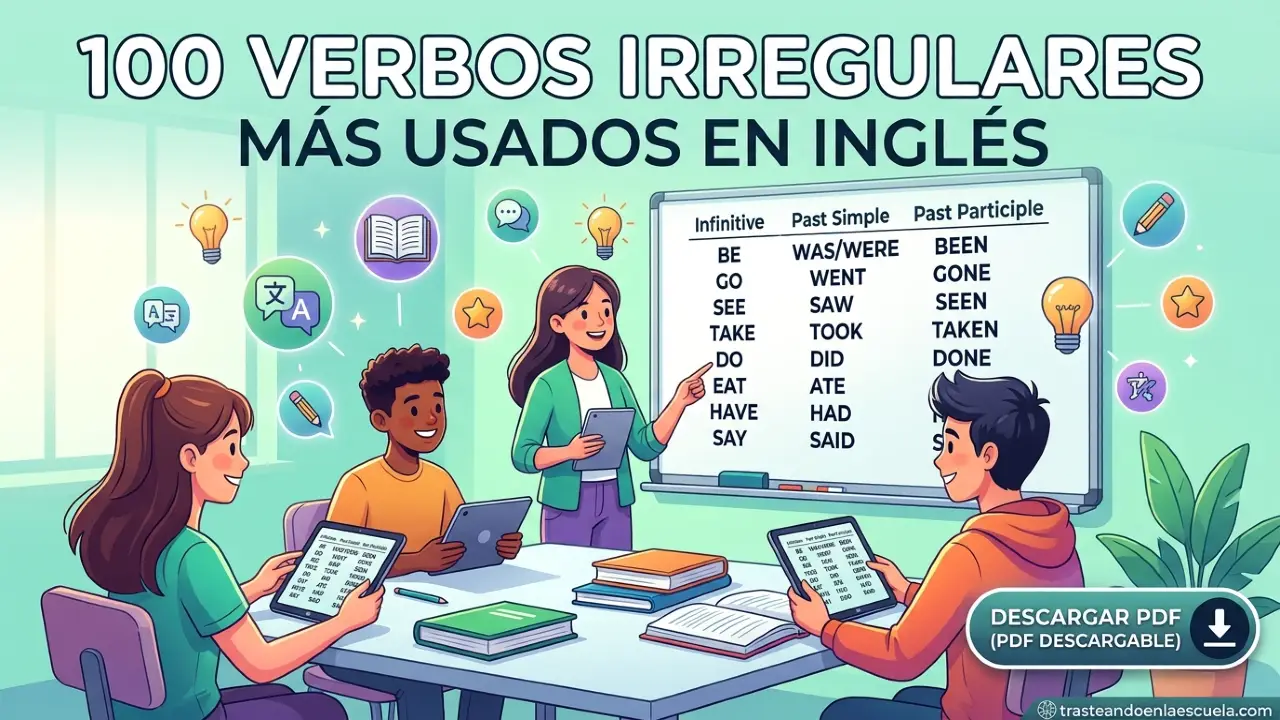
Los 100 verbos irregulares más usados en inglés (PDF)
Los verbos irregulares son el «talón de Aquiles» de muchos estudiantes de inglés. No siguen reglas, así que la única forma de aprenderlos es… ¡memorizarlos! Pero no te preocupes, hemos recopilado los 100 más importantes para que los tengas siempre a mano.
🎯 En este post encontrarás: La lista completa de los 100 verbos irregulares más comunes, con su pronunciación aproximada y ejemplos. Además, al final, un enlace para descargar el PDF GRATIS y llevarlo siempre contigo.
📥 Descarga tu PDF gratis
Haz clic en el botón para descargar la lista completa de los 100 verbos irregulares en formato PDF. Imprímela, guárdala en tu móvil o pégala en la pared. ¡Todo sea por aprender!
⬇️ DESCARGAR PDF (100 VERBOS)No te preocupes, el enlace es seguro y el archivo pesa menos de 1 MB.
📝 Lista completa: 100 verbos irregulares
Aquí tienes la lista. Los hemos ordenado alfabéticamente para que sea más fácil consultarla. Junto a cada verbo, encontrarás el past simple, el participio y su traducción al español.
| Infinitivo | Past Simple | Past Participle | Traducción |
|---|---|---|---|
| arise | arose | arisen | surgir, levantarse |
| awake | awoke | awoken | despertarse |
| be | was/were | been | ser, estar |
| bear | bore | borne | soportar, dar a luz |
| beat | beat | beaten | golpear, vencer |
| become | became | become | llegar a ser, convertirse |
| begin | began | begun | empezar |
| bend | bent | bent | doblar, inclinarse |
| bet | bet | bet | apostar |
| bind | bound | bound | atar, obligar |
| bite | bit | bitten | morder |
| bleed | bled | bled | sangrar |
| blow | blew | blown | soplar |
| break | broke | broken | romper |
| breed | bred | bred | criar, reproducirse |
| bring | brought | brought | traer |
| build | built | built | construir |
| burn | burnt/burned | burnt/burned | quemar |
| burst | burst | burst | estallar, reventar |
| buy | bought | bought | comprar |
| cast | cast | cast | lanzar, arrojar |
| catch | caught | caught | atrapar |
| choose | chose | chosen | elegir |
| cling | clung | clung | aferrarse, adherirse |
| come | came | come | venir |
| cost | cost | cost | costar |
| creep | crept | crept | arrastrarse, deslizarse |
| cut | cut | cut | cortar |
| deal | dealt | dealt | tratar, negociar |
| dig | dug | dug | cavar |
| do | did | done | hacer |
| draw | drew | drawn | dibujar, atraer |
| dream | dreamt/dreamed | dreamt/dreamed | soñar |
| drink | drank | drunk | beber |
| drive | drove | driven | conducir |
| dwell | dwelt | dwelt | morar, residir |
| eat | ate | eaten | comer |
| fall | fell | fallen | caer |
| feed | fed | fed | alimentar |
| feel | felt | felt | sentir |
| fight | fought | fought | pelear, luchar |
| find | found | found | encontrar |
| flee | fled | fled | huir |
| fly | flew | flown | volar |
| forbid | forbade | forbidden | prohibir |
| forget | forgot | forgotten | olvidar |
| forgive | forgave | forgiven | perdonar |
| freeze | froze | frozen | congelar |
| get | got | got/gotten | obtener, conseguir |
| give | gave | given | dar |
| go | went | gone | ir |
| grind | ground | ground | moler |
| grow | grew | grown | crecer, cultivar |
| hang | hung/hanged | hung/hanged | colgar (hung); ahorcar (hanged) |
| have | had | had | tener, haber |
| hear | heard | heard | oír |
| hide | hid | hidden | esconder |
| hit | hit | hit | golpear, chocar |
| hold | held | held | sostener, mantener |
| hurt | hurt | hurt | herir, doler |
| keep | kept | kept | guardar, mantener |
| kneel | knelt/kneeled | knelt/kneeled | arrodillarse |
| know | knew | known | saber, conocer |
| lay | laid | laid | poner, colocar |
| lead | led | led | guiar, conducir |
| lean | leant/leaned | leant/leaned | apoyarse, inclinarse |
| leap | leapt/leaped | leapt/leaped | saltar, brincar |
| learn | learnt/learned | learnt/learned | aprender |
| leave | left | left | dejar, salir |
| lend | lent | lent | prestar |
| let | let | let | permitir, dejar |
| lie | lay | lain | tumbarse, yacer |
| light | lit | lit | encender, iluminar |
| lose | lost | lost | perder |
| make | made | made | hacer, fabricar |
| mean | meant | meant | significar, querer decir |
| meet | met | met | conocer, encontrarse |
| pay | paid | paid | pagar |
| put | put | put | poner, colocar |
| quit | quit | quit | dejar, renunciar |
| read | read | read | leer (pronunciación /red/ en pasado) |
| ride | rode | ridden | montar, cabalgar |
| ring | rang | rung | sonar, llamar por teléfono |
| rise | rose | risen | elevarse, levantarse |
| run | ran | run | correr |
| say | said | said | decir |
| see | saw | seen | ver |
| seek | sought | sought | buscar |
| sell | sold | sold | vender |
| send | sent | sent | enviar |
| set | set | set | poner, establecer |
| shake | shook | shaken | agitar, temblar |
| shine | shone | shone | brillar |
| shoot | shot | shot | disparar, filmar |
| show | showed | shown/showed | mostrar |
| shut | shut | shut | cerrar |
| sing | sang | sung | cantar |
| sink | sank | sunk | hundirse |
| sit | sat | sat | sentarse |
| sleep | slept | slept | dormir |
| slide | slid | slid | deslizarse |
| speak | spoke | spoken | hablar |
| spend | spent | spent | gastar, pasar tiempo |
| stand | stood | stood | estar de pie |
| steal | stole | stolen | robar |
| stick | stuck | stuck | pegar, clavar |
| swim | swam | swum | nadar |
| take | took | taken | tomar, llevar |
| teach | taught | taught | enseñar |
| tell | told | told | decir, contar |
| think | thought | thought | pensar |
| throw | threw | thrown | lanzar, tirar |
| understand | understood | understood | entender |
| wake | woke | woken | despertar(se) |
| wear | wore | worn | llevar puesto, usar |
| win | won | won | ganar |
| write | wrote | written | escribir |
🧠 Trucos para memorizar los verbos irregulares
🔊 1. Agrupa por patrones
Aunque son «irregulares», muchos siguen patrones. Aprende por grupos y te será más fácil:
- Grupo A-A-A (todas iguales): cut-cut-cut, put-put-put, hit-hit-hit, cost-cost-cost.
- Grupo A-B-A (infinitivo y participio iguales): become-became-become, come-came-come, run-ran-run.
- Grupo A-B-B (past simple y participio iguales): build-built-built, send-sent-sent, have-had-had, make-made-made, buy-bought-bought.
- Grupo A-B-C (las tres diferentes): begin-began-begun, drink-drank-drunk, sing-sang-sung, drive-drove-driven, write-wrote-written.
📱 2. Usa aplicaciones y tarjetas
Aplicaciones como Quizlet o Anki te permiten crear tarjetas de memoria (flashcards) con el verbo en infinitivo por un lado y el pasado/participio por el otro. Repasa 10 minutos al día y verás resultados.
🎵 3. Cán talos o crea rimas
Poner los verbos en una canción o ritmo ayuda a la memoria. Busca en YouTube «irregular verbs song» y verás cómo se te quedan grabados sin esfuerzo.
✍️ 4. Escríbelos en contexto
No memorices listas aisladas. Escribe oraciones con cada verbo. Por ejemplo: «Yesterday I woke up late. I drank coffee and ate toast. Then I drove to work.»
📝 Ejercicios con verbos irregulares
Ejercicio 1: Completa con el past simple
Completa las oraciones con el past simple del verbo entre paréntesis.
- Yesterday, I _____ (go) to the supermarket.
- She _____ (buy) a new dress.
- They _____ (see) a great film.
- He _____ (write) a letter to his grandmother.
- We _____ (have) dinner at a fancy restaurant.
✅ Ver soluciones
- went
- bought
- saw
- wrote
- had
Ejercicio 2: Completa con el participio
Completa las oraciones con el past participle del verbo entre paréntesis. (Frases en presente perfecto).
- I have never _____ (eat) sushi.
- She has _____ (write) three books.
- They have _____ (go) to Italy twice.
- He has _____ (break) his leg.
- We have _____ (see) that movie before.
✅ Ver soluciones
- eaten
- written
- gone
- broken
- seen
Ejercicio 3: Elige la opción correcta
- She (did / made) her homework.
- He (found / founded) a wallet on the street.
- They (went / gone) to the beach.
- I have (did / done) it.
- The glass (broke / broken) into pieces.
✅ Ver soluciones
- She did her homework. (Do homework = hacer deberes).
- He found a wallet. (Find = encontrar).
- They went to the beach.
- I have done it.
- The glass broke into pieces.
Ejercicio 4: Traduce al inglés
- Ayer conocí al hermano de María.
- ¿Has visto mi teléfono?
- Ella me dijo la verdad.
- Perdí las llaves ayer.
- Han construido un puente nuevo.
✅ Ver soluciones
- Yesterday I met Maria’s brother.
- Have you seen my phone?
- She told me the truth.
- I lost the keys yesterday.
- They have built a new bridge.
Ejercicio 5: Corrige los errores
- I have went to the cinema.
- She buyed a new car.
- He has wrote a poem.
- We seen the Eiffel Tower.
- They have drinked all the water.
✅ Ver soluciones
- I have gone to the cinema.
- She bought a new car.
- He has written a poem.
- We saw the Eiffel Tower. (O «We have seen»)
- They have drunk all the water.
📚 Serie completa: Past Simple y Past Continuous
Domina todos los aspectos del pasado en inglés:
- Past simple: verbos regulares e irregulares – Post 6: La base de todo.
- Past continuous: usos y ejemplos – Post 7: La acción en desarrollo.
- Past simple vs past continuous: ejercicios – Post 8: Practica la diferencia.
- When y while con past continuous – Post 9: Conectores temporales.
- 100 verbos irregulares más usados (PDF) – ¡Estás aquí!
💡 Desafío final: Escribe un pequeño párrafo sobre tus últimas vacaciones usando al menos 10 verbos de esta lista. Por ejemplo: «I went to the beach, I swam in the sea, I ate delicious food, I took many photos…»





Publicar comentario