Posesivos con familia: my, your, his, her, our, their
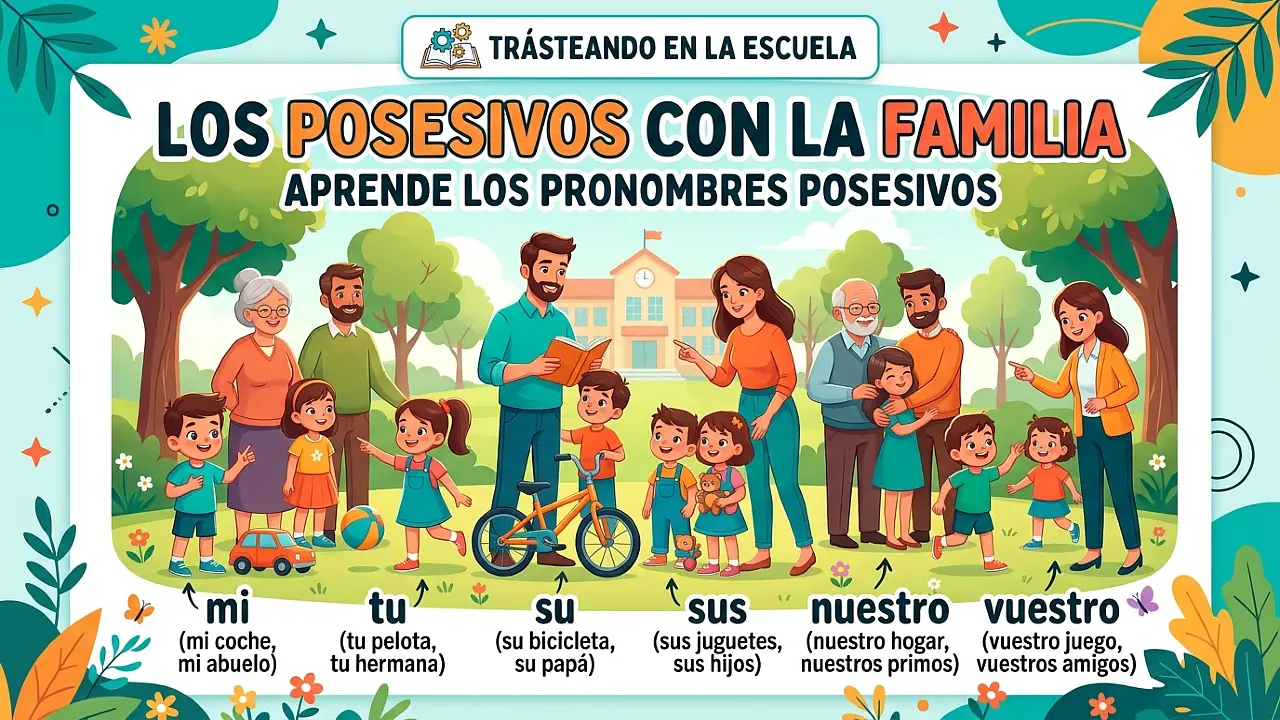
Posesivos con familia: my, your, his, her, our, their
Cuando hablas de tu familia en inglés, usas adjetivos posesivos constantemente. ¿Sabes la diferencia entre «my mother» y «her mother»? ¿Cuándo usamos «his» y cuándo «her»? En este post aprenderás todos los adjetivos posesivos en inglés (my, your, his, her, its, our, their) aplicados al vocabulario de la familia, con ejemplos claros, errores comunes y 5 ejercicios. Este es el quinto y último post de nuestra serie sobre la familia.
🎯 En este post aprenderás: La lista completa de adjetivos posesivos, cómo usarlos correctamente con family members, la diferencia entre «his» y «her», cómo evitar errores como confundir «your» con «you’re», y 5 ejercicios con soluciones. Antes de este, te recomiendo repasar family members, in-laws, family tree y cómo describir a tu familia.
🔍 ¿Qué son los adjetivos posesivos?
📌 Palabras que indican posesión o pertenencia
Los adjetivos posesivos (possessive adjectives) son palabras que indican quién posee o a quién pertenece algo o alguien. En inglés son: my, your, his, her, its, our, their. Siempre van delante de un sustantivo (la persona o cosa poseída). En el contexto de la familia, nos dicen de quién es ese familiar.
📊 Tabla de adjetivos posesivos
| Pronombre sujeto | Adjetivo posesivo | Ejemplo con familia |
|---|---|---|
| I | my | my mother |
| you | your | your brother |
| he | his | his sister |
| she | her | her father |
| it | its | its owner (raro con familia) |
| we | our | our grandparents |
| they | their | their children |
Importante: Los adjetivos posesivos NUNCA llevan apóstrofe. «It’s» significa «it is» o «it has», no el posesivo «its». Tampoco confundas «your» (tu) con «you’re» (you are).
👨👩👧👦 Uso detallado de cada posesivo con la familia
Se usa cuando el hablante es el poseedor. Se refiere a la familia del hablante.
- «My father is a doctor.» (Mi padre es médico.)
- «I love my mother very much.»
- «My brothers are older than me.»
- «Where is my sister?»
Se usa para dirigirse a una o más personas. Se refiere a la familia del oyente.
- «Is your grandmother still alive?» (¿Tu abuela aún vive?)
- «I like your parents. They are very kind.»
- «What does your brother do for work?»
Se usa cuando el poseedor es un hombre o animal masculino.
- «Tom loves his mother.» (Tom ama a su madre.)
- «Peter is with his wife.»
- «His parents live in London.»
- «Does his sister speak Spanish?»
Se usa cuando la poseedora es una mujer o animal femenino.
- «Maria visits her grandmother every Sunday.» (María visita a su abuela cada domingo.)
- «Anna is with her brother.»
- «Her parents are teachers.»
- «Does her daughter go to this school?»
Se usa para objetos, animales o cosas. Muy raro con familia, excepto si hablamos de animales.
- «The cat loves its kittens.» (La gata ama a sus gatitos.)
- «The bird built its nest.»
Se usa cuando el hablante se incluye a sí mismo junto con otros (nosotros).
- «Our father works hard.» (Nuestro padre trabaja duro.)
- «We love our grandparents.»
- «Our children are at school.»
Se usa cuando los poseedores son un grupo de personas o cosas.
- «John and Mary love their children.» (Juan y María aman a sus hijos.)
- «Their parents are coming to visit.»
- «Do you know their son?»
- «Their family is very large.»
💡 Regla de oro: El adjetivo posesivo en inglés concuerda con el poseedor, no con la cosa poseída. Por ejemplo: «Maria has a brother. Her brother is tall.» (Maria es femenino → her). «Tom has a sister. His sister is short.» (Tom es masculino → his). En español decimos «su hermano» para ambos, pero en inglés debes distinguir.
❌ Errores comunes con posesivos y familia
| Error | Incorrecto | Correcto | Explicación |
|---|---|---|---|
| Usar «the» delante del posesivo | The my mother is nice. | My mother is nice. | Nunca uses «the» + adjetivo posesivo. |
| Confundir «his» y «her» | Ana loves his brother. | Ana loves her brother. | Ana es femenino → her. |
| Confundir «your» y «you’re» | You’re mother is kind. | Your mother is kind. | «You’re» = you are. |
| Confundir «its» y «it’s» | The dog loves it’s owner. | The dog loves its owner. | «It’s» = it is / it has. |
| Olvidar el posesivo con familia | Mother is a doctor. | My mother is a doctor. | Salvo contexto genérico, usa posesivo. |
📌 Ejemplo de párrafo usando todos los posesivos:
«My name is Laura. My family is small. My father is an engineer and my mother is a nurse. I have one brother. His name is Carlos. His wife is Sofia. Her parents live in Madrid. Our grandparents are very healthy. Their house is near the beach. We love our family very much.»
Traducción: «Mi nombre es Laura. Mi familia es pequeña. Mi padre es ingeniero y mi madre es enfermera. Tengo un hermano. Su nombre es Carlos. Su esposa es Sofía. Los padres de ella viven en Madrid. Nuestros abuelos están muy sanos. Su casa está cerca de la playa. Queremos mucho a nuestra familia.»
🔄 Diferencia entre adjetivos posesivos y pronombres posesivos
No confundas los adjetivos posesivos (my, your, his, her, its, our, their) con los pronombres posesivos (mine, yours, his, hers, its, ours, theirs). Los pronombres posesivos sustituyen al sustantivo y van solos.
| Adjetivo posesivo + sustantivo | Pronombre posesivo |
|---|---|
| That is my car. | That car is mine. |
| This is your book. | This book is yours. |
| She is his sister. | That sister is his. |
| I like her dress. | That dress is hers. |
| Our house is big. | The big house is ours. |
| Their children are young. | The young children are theirs. |
⚠️ Nota: «His» es igual para el adjetivo y el pronombre. «Its» casi no se usa como pronombre.
📝 Preguntas comunes con posesivos y familia
Cuando haces preguntas sobre la familia de alguien, necesitas usar el posesivo correcto. Aquí tienes estructuras útiles:
- What is + possessive + family member + name?
«What is your mother’s name?» (¿Cómo se llama tu madre?) - How old is + possessive + family member?
«How old is his sister?» (¿Cuántos años tiene su hermana?) - Does + possessive + family member + have…?
«Does her father have a car?» (¿Su padre tiene coche?) - Where do + possessive + family member (plural) + live?
«Where do your grandparents live?» (¿Dónde viven tus abuelos?)
🗣️ Ejemplo de diálogo usando posesivos:
Anna: «What is your brother’s name?»
Paul: «My brother’s name is Mark.»
Anna: «And what does your sister do?»
Paul: «My sister is a student. What about you? Do you have siblings?»
Anna: «Yes, I have one sister. Her name is Laura. Her husband is a teacher.»
Paul: «Oh, so your brother-in-law is a teacher!»
🧩 5 ejercicios para dominar los posesivos con familia
📝 Ejercicio 1: Elige el posesivo correcto
- I love ________ mother. She is the best. (my / your)
- Tom has a sister. ________ sister is a doctor. (His / Her)
- Maria, is ________ father at home? (your / his)
- We live with ________ grandparents. (our / their)
- John and Mary have two children. ________ children are very polite. (Our / Their)
- My sister has a new job. ________ boss is very nice. (His / Her)
✅ Ver soluciones
- my
- His
- your
- our
- Their
- Her
📝 Ejercicio 2: Corrige los errores
Cada frase tiene un error con los posesivos. Escríbela correctamente.
- She loves his mother very much.
- Your’re brother is very tall.
- The my father works in a bank.
- Ana and I visit we grandmother every weekend.
- John has a dog. It’s name is Max.
✅ Ver soluciones
- She loves her mother very much.
- Your brother is very tall.
- My father works in a bank.
- Ana and I visit our grandmother every weekend.
- John has a dog. Its name is Max.
📝 Ejercicio 3: Completa el párrafo
Completa con my, your, his, her, our, their.
Hello! ______ name is Sarah. I want to tell you about ______ family. ______ father is a doctor and ______ mother is a teacher. I have one brother. ______ name is David. David has a wife, Lisa. ______ wife is an architect. ______ parents (David and Lisa) have one daughter. ______ daughter is my niece. ______ name is Emma. We all love ______ family very much. What about ______ family? Tell me about ______ parents and siblings.
✅ Ver soluciones
Texto correcto:
Hello! My name is Sarah. I want to tell you about my family. My father is a doctor and my mother is a teacher. I have one brother. His name is David. David has a wife, Lisa. His wife is an architect. Their parents (David and Lisa) have one daughter. Their daughter is my niece. Her name is Emma. We all love our family very much. What about your family? Tell me about your parents and siblings.
📝 Ejercicio 4: Traduce al inglés
- Mi hermana es inteligente.
- ¿Dónde está tu madre?
- El padre de él es policía.
- Los abuelos de ella viven en México.
- Nuestros primos son muy divertidos.
- Los hijos de ellos estudian medicina.
✅ Ver soluciones
- My sister is intelligent.
- Where is your mother?
- His father is a police officer.
- Her grandparents live in Mexico.
- Our cousins are very funny.
- Their children study medicine.
📝 Ejercicio 5: Crea preguntas y respuestas
Escribe una pregunta usando el posesivo indicado y luego responde según tu familia (o inventa).
- Pregunta sobre el nombre de tu madre (my).
- Pregunta sobre la edad de la hermana de él (his).
- Pregunta sobre la profesión del padre de ella (her).
- Pregunta sobre el lugar donde viven nuestros abuelos (our).
- Pregunta sobre el colegio de los hijos de ellos (their).
✅ Ejemplos de respuestas
- Q: What is your mother’s name? A: My mother’s name is Ana.
- Q: How old is his sister? A: His sister is 25 years old.
- Q: What is her father’s job? A: Her father is an engineer.
- Q: Where do our grandparents live? A: Our grandparents live in the countryside.
- Q: What school do their children go to? A: Their children go to a public school.
📖 Glosario de términos posesivos
| Término | Definición |
|---|---|
| Possessive adjective | Adjetivo posesivo (my, your, his, her, its, our, their). Va antes de un sustantivo. |
| Possessive pronoun | Pronombre posesivo (mine, yours, his, hers, its, ours, theirs). Sustituye al sustantivo. |
| Owner | Poseedor (la persona o cosa que posee). |
| Apostrophe s (‘s) | Se usa para mostrar posesión en nombres propios (ej. John’s car, my mother’s name). No se usa con adjetivos posesivos. |
📚 Serie completa: La familia en inglés
¡Has completado el cluster! Estos son todos los posts:
- Family members: padre, madre, hermanos
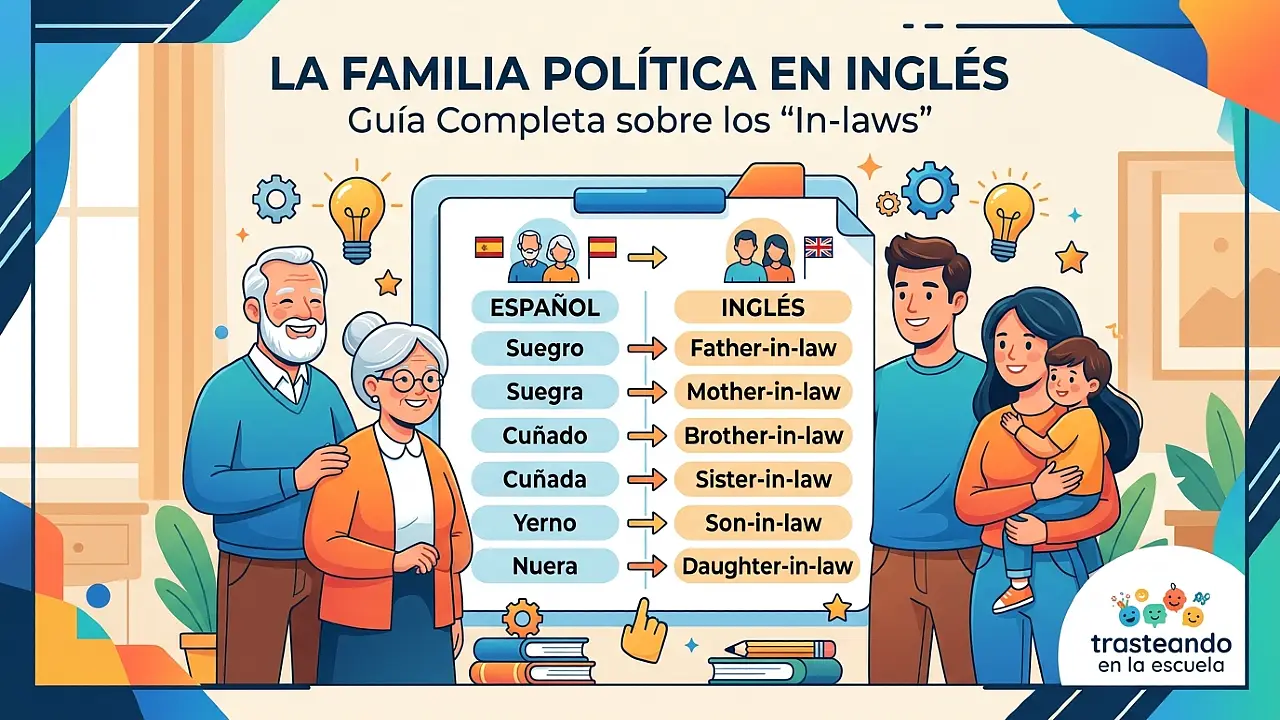
- In-laws: familia política
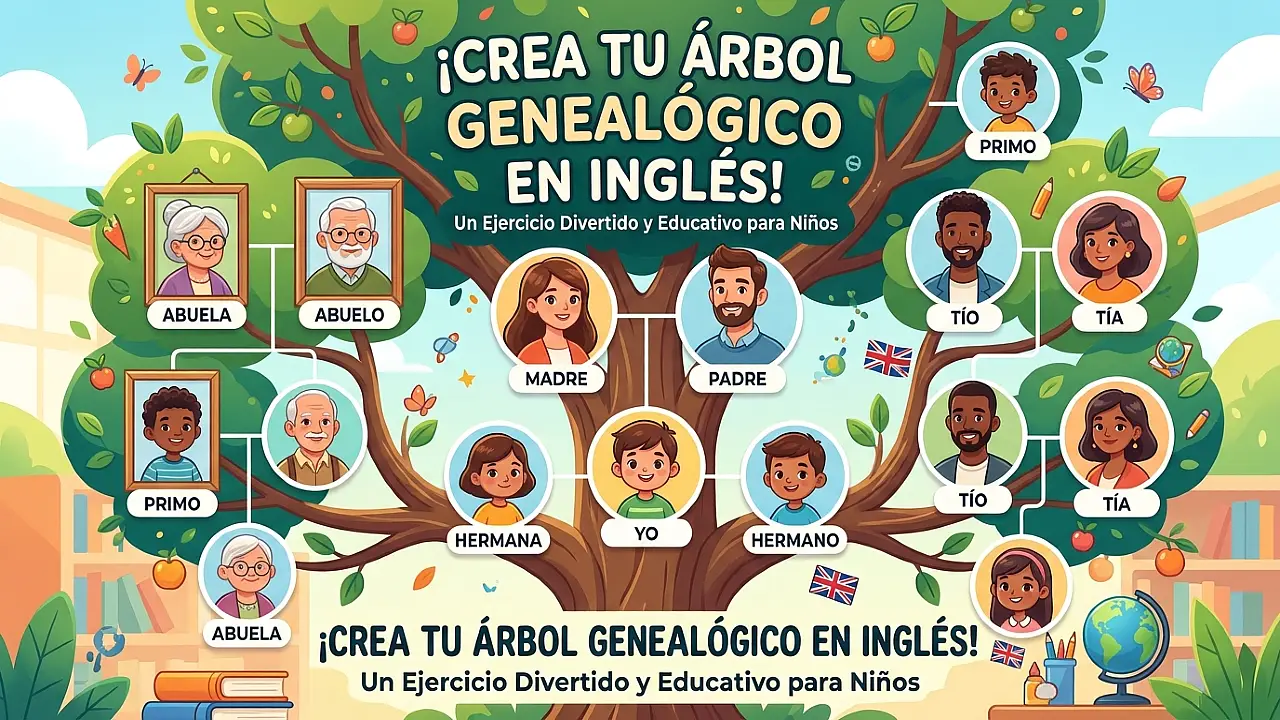
- Family tree: árbol genealógico
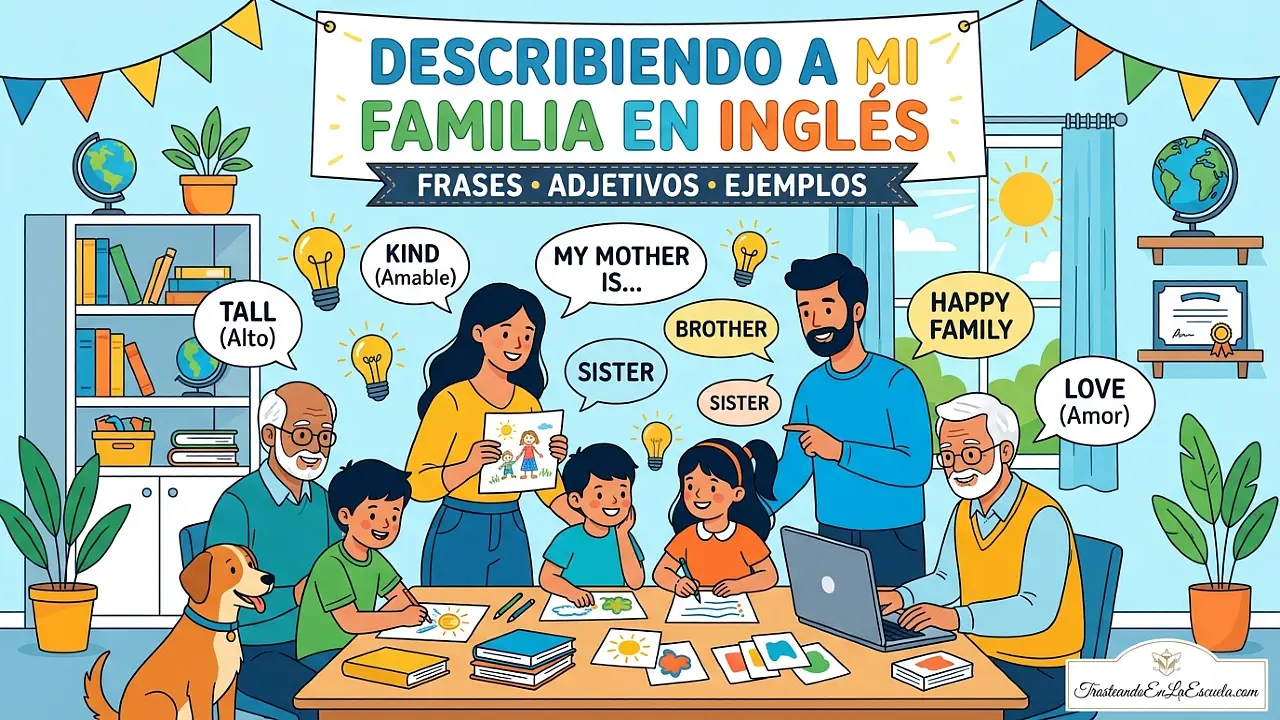
- Describir a mi familia: frases útiles
- 👉 Posesivos con familia: my, your, his (este post)
Ahora ya puedes hablar de tu familia en inglés con confianza. ¡Felicidades!
🏆 Reto final del cluster: Escribe un texto de 10 oraciones sobre tu familia (real o imaginaria) en el que utilices al menos 5 adjetivos posesivos diferentes y 10 family members distintos. Luego, grábalo en audio y compártelo con un compañero de estudio para que te corrija. ¡Has llegado al final de la serie! Sigue practicando y no olvides revisar el resto de nuestros posts de gramática y vocabulario.











Publicar comentario