Places in town: Vocabulario completo de la ciudad en inglés
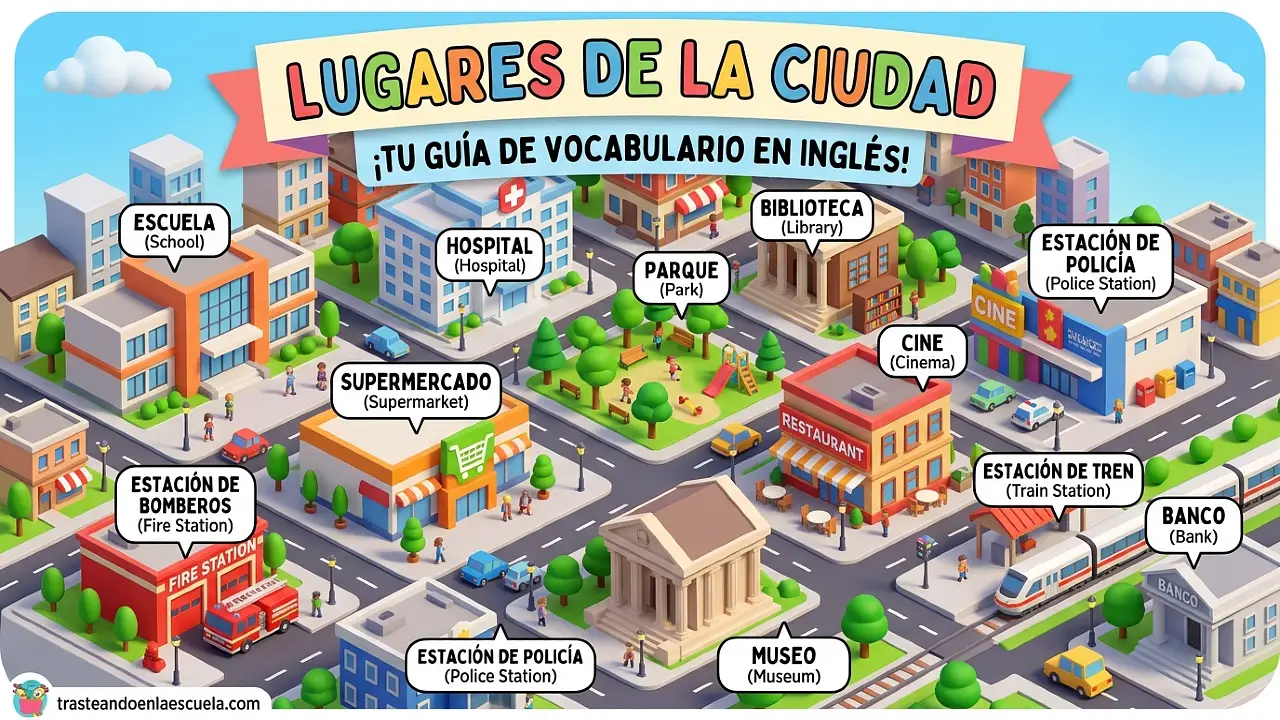
Places in town: Guía definitiva de lugares de la ciudad en inglés
¿Alguna vez has necesitado preguntar dónde está la biblioteca, el banco o la estación de tren en inglés? Para moverte con soltura en una ciudad angloparlante, necesitas conocer los nombres de los lugares más comunes. En este post aprenderás el vocabulario esencial de places in town (lugares de la ciudad) con pronunciación, ejemplos reales, diferencias entre inglés británico y americano, diálogos completos y 8 ejercicios prácticos.
🎯 En este post aprenderás: Los 60+ lugares más importantes de la ciudad, cómo usarlos en frases, preposiciones de lugar básicas y avanzadas, diferencias entre términos similares (square vs plaza, street vs road vs avenue), y ejercicios para consolidar tu vocabulario.
🔍 ¿Qué son los «places in town»?
Los places in town son todos los sitios que puedes encontrar en una ciudad o pueblo: edificios, espacios públicos, comercios, servicios, etc. Dominar este vocabulario te permite dar y pedir direcciones, describir tu barrio y entender conversaciones cotidianas. Este post se centra en lugares públicos y de interés general. Para tiendas específicas y edificios públicos más detallados, consulta nuestros posts dedicados: Shops y Buildings.
📋 Lista completa de places in town (60+ entradas)
Aquí tienes la tabla más completa de lugares de la ciudad. Incluye pronunciación fonética aproximada, variantes UK/US y una frase de ejemplo.
| Español | English (UK/US) | Pronunciación | Ejemplo |
|---|---|---|---|
| Ayuntamiento | town hall (UK) / city hall (US) | taun jol / sí-ti jol | The wedding will be at the town hall. |
| Biblioteca | library | lái-bre-ri | I study at the library every weekend. |
| Parque | park | park | Let’s have a picnic in the park. |
| Jardín | garden (UK) / yard (US) | gár-den / yard | My house has a beautiful garden. |
| Plaza | square | skuér | The square is full of cafes and restaurants. |
| Calle | street | stríit | Main Street is very busy on Saturdays. |
| Avenida | avenue | á-ve-niu | Fifth Avenue is famous for its shops. |
| Carretera | road | roud | Be careful when you cross this road. |
| Puente | bridge | brich | The bridge connects the two sides of the river. |
| Río | river | rí-ver | We walked along the river for an hour. |
| Estación de tren | train station / railway station (UK) | tréin stéi-shon | The train station is next to the bus stop. |
| Estación de autobús | bus station | bas stéi-shon | I arrived at the bus station at 8 am. |
| Parada de autobús | bus stop | bas stop | There’s a bus stop near my house. |
| Aeropuerto | airport | ér-port | We need to be at the airport two hours early. |
| Hospital | hospital | jós-pi-tal | The hospital is open 24/7 for emergencies. |
| Centro de salud | health centre / clinic | jélf senter / klí-nik | I have an appointment at the health centre. |
| Farmacia | pharmacy (US) / chemist’s (UK) | fár-ma-si / ké-mists | I need to go to the pharmacy for medicine. |
| Colegio | school (primary school) | skúl | The school is closed today due to snow. |
| Instituto | high school / secondary school | jái skúl | My sister is in high school. |
| Universidad | university / college (US) | iu-ni-vér-si-ti | She studies biology at the university. |
| Museo | museum | miu-sí-om | The museum is free on Sundays. |
| Teatro | theatre (UK) / theater (US) | zí-a-ter | We watched a play at the theatre. |
| Cine | cinema (UK) / movie theater (US) | sí-ne-ma / mú-vi zí-a-ter | Let’s go to the cinema tonight. |
| Iglesia | church | cherch | The church bells ring every hour. |
| Catedral | cathedral | ka-zí-dral | The cathedral is a very old building. |
| Piscina | swimming pool | suí-ming púl | We go to the swimming pool every Tuesday. |
| Polideportivo | sports centre (UK) / sports center (US) | spórts senter | He works out at the sports centre. |
| Estadio | stadium | stéi-di-om | The stadium holds 50,000 people. |
| Parque infantil | playground | pléi-graund | The children are playing at the playground. |
| Zona peatonal | pedestrian zone | pe-dés-tri-an zóun | This street is a pedestrian zone, no cars allowed. |
| Comisaría | police station | po-lís stéi-shon | The police station is on the corner of Elm Street. |
| Parque de bomberos | fire station | fáier stéi-shon | There’s a fire station next to the hospital. |
| Banco | bank | bank | I need to go to the bank to withdraw money. |
| Oficina de correos | post office | póst ó-fis | Send the letter at the post office. |
| Mercado | market | már-ket | The market is open on Saturdays from 9 to 3. |
| Fuente | fountain | fáun-tin | The fountain is in the centre of the square. |
| Estatua | statue | stá-chu | A statue of the king stands in front of the palace. |
| Centro comercial | shopping centre (UK) / mall (US) | shó-ping senter / mol | We bought new shoes at the shopping centre. |
| Hotel | hotel | jou-tél | We stayed in a hotel near the beach. |
| Camping | campsite | kámp-sait | The campsite has showers and a shop. |
| Aparcamiento | car park (UK) / parking lot (US) | kar park / pár-king lot | Is there a car park near here? |
| Faro | lighthouse | láit-jaus | The lighthouse guides ships at night. |
| Castillo | castle | ká-sel | We visited an old castle from the 12th century. |
| Muralla | city wall | sí-ti wol | The city wall was built to protect the town. |
| Embajada | embassy | ém-ba-si | The Spanish embassy is in London. |
| Ayuntamiento antiguo | guildhall | gíld-jol | The guildhall is a historic building. |
💡 Diferencia clave: Street suele ser una calle con edificios a ambos lados; road es más genérico (carretera); avenue es una avenida ancha, a menudo con árboles. En direcciones, usa «on + street» (I live on Main Street).
🗣️ Frases útiles con places in town (más de 30 ejemplos)
📍 Preguntar dónde está un lugar
- Excuse me, where is the library? (Disculpe, ¿dónde está la biblioteca?)
- Is there a bank near here? (¿Hay un banco cerca de aquí?)
- How can I get to the train station? (¿Cómo puedo llegar a la estación de tren?)
- Which is the way to the museum? (¿Cuál es el camino al museo?)
- Could you tell me how to get to the post office? (¿Podría decirme cómo llegar a la oficina de correos?)
- What’s the best way to the city centre? (¿Cuál es la mejor manera de ir al centro?)
- How far is the airport from here? (¿A qué distancia está el aeropuerto?)
📍 Dar indicaciones básicas y avanzadas
- The park is opposite the school. (El parque está enfrente de la escuela.)
- The hospital is next to the fire station. (El hospital está al lado del parque de bomberos.)
- Go straight on and turn left at the square. (Sigue recto y gira a la izquierda en la plaza.)
- It’s on the corner of Main Street and Second Avenue. (Está en la esquina de Main Street y Second Avenue.)
- The cinema is between the bank and the bookshop. (El cine está entre el banco y la librería.)
- Walk two blocks, then turn right. The library is on your left. (Camina dos manzanas, luego gira a la derecha. La biblioteca está a tu izquierda.)
📍 Describir tu barrio o ciudad
- I live near the park. (Vivo cerca del parque.)
- There are many shops in my neighbourhood. (Hay muchas tiendas en mi barrio.)
- My school is a five-minute walk from my house. (Mi escuela está a cinco minutos a pie de mi casa.)
- We have a beautiful church in the town centre. (Tenemos una iglesia preciosa en el centro.)
- The town hall is a historic building. (El ayuntamiento es un edificio histórico.)
- My favourite place is the swimming pool because I love swimming. (Mi lugar favorito es la piscina porque me encanta nadar.)
🧭 Preposiciones de lugar esenciales (con ejemplos visuales)
Para hablar de lugares necesitas preposiciones. Aquí las más comunes con oraciones completas:
| Preposición | Uso | Ejemplo |
|---|---|---|
| next to | al lado de | The library is next to the bank. |
| opposite / across from | enfrente de | The cinema is opposite the park. |
| between | entre (dos cosas) | The school is between the church and the hospital. |
| behind | detrás de | The car park is behind the supermarket. |
| in front of | delante de | The statue is in front of the town hall. |
| near | cerca de | Is there a post office near here? |
| far from | lejos de | The airport is far from the city centre. |
| on the corner of | en la esquina de | The pharmacy is on the corner of Main Street and 5th Avenue. |
| around the corner | a la vuelta de la esquina | There’s a great cafe just around the corner. |
🎧 Diálogo completo: Pidiendo direcciones en la calle
Tourist: Excuse me, where is the nearest underground station?
Local: Go straight on for about 200 metres. You’ll see a big square. Turn left at the square. Then take the second street on your right. The station is on your left, next to a library.
Tourist: Is it far from here?
Local: No, it’s about a five-minute walk. You can’t miss it.
Tourist: Thank you very much!
Local: You’re welcome.
🌍 Diferencias entre inglés británico y americano (lugares)
| Español | Reino Unido (UK) | Estados Unidos (US) |
|---|---|---|
| Aparcamiento | car park | parking lot |
| Centro comercial | shopping centre | mall |
| Zona peatonal | pedestrian zone | pedestrian mall / walkway |
| Parque infantil | playground | playground (same) |
| Planta baja | ground floor | first floor |
| Tienda de la esquina | corner shop | convenience store |
🧠 8 ejercicios prácticos para dominar el vocabulario
Ejercicio 1: Traduce al inglés los siguientes lugares
- Biblioteca → ______
- Ayuntamiento → ______
- Estación de tren → ______
- Plaza → ______
- Parque de bomberos → ______
- Comisaría → ______
- Fuente → ______
- Estadio → ______
✅ Ver solución
a) library, b) town hall / city hall, c) train station, d) square, e) fire station, f) police station, g) fountain, h) stadiumEjercicio 2: Completa con la preposición correcta (next to, opposite, between, behind, in front of, near, far from)
- The hospital is ______ the police station and the school. (between)
- The bank is ______ the library (al lado). (next to)
- The car park is ______ the supermarket (detrás). (behind)
- The cinema is ______ the park (enfrente). (opposite)
- The statue is ______ the town hall (delante). (in front of)
- The airport is ______ the city centre (lejos). (far from)
- There’s a bus stop ______ my house (cerca). (near)
✅ Solución
a) between, b) next to, c) behind, d) opposite, e) in front of, f) far from, g) nearEjercicio 3: Verdadero o falso (corrige los falsos)
- A «bus station» is where you catch a bus. (True)
- A «library» is a place where you buy books. (False – you borrow/read books)
- «Town hall» and «city hall» mean the same. (True)
- A «square» is a long road with many shops. (False – it’s an open public space)
- You can swim in a «swimming pool». (True)
- A «fire station» is where policemen work. (False – firefighters)
- A «cathedral» is a small church. (False – large, important church)
✅ Solución
a) T, b) F (a bookshop is where you buy books), c) T, d) F, e) T, f) F, g) FEjercicio 4: Ordena las palabras para formar frases correctas
- is / the / Where / station / train / ?
- bank / near / Is / a / there / here / ?
- to / next / school / The / is / library / the / .
- centre / town / the / in / church / is / The / .
- straight / Go / and / left / turn / the / at / traffic lights / .
✅ Solución
a) Where is the train station?b) Is there a bank near here?
c) The school is next to the library.
d) The church is in the town centre.
e) Go straight and turn left at the traffic lights.
Ejercicio 5: Escribe 5 frases describiendo tu ciudad o barrio usando al menos 8 lugares de la lista
✅ Ejemplo de respuesta
- In my town there is a beautiful park with a fountain.
- The library is opposite the town hall.
- My school is next to the fire station.
- We have a modern swimming pool and a sports centre.
- The train station is far from the city centre, but there is a bus stop near my house.
Ejercicio 6: Completa el diálogo con las palabras adecuadas (square, straight, left, right, opposite, next to)
Anna: Excuse me, how do I get to the museum?
Mark: Go _______ (1) on until you see a big ______ (2). Turn _______ (3) at the square. Then take the first ______ (4). The museum is _______ (5) the bank, _______ (6) to the library.
✅ Solución
1) straight, 2) square, 3) left, 4) right, 5) opposite, 6) nextEjercicio 7: Relaciona cada definición con el lugar correcto
- You go here to see a football match. → stadium
- You go here to borrow books. → library
- You go here to pray (Christians). → church
- You go here to catch a plane. → airport
- You go here to withdraw money. → bank
✅ Solución
a) stadium, b) library, c) church, d) airport, e) bankEjercicio 8: Traduce las siguientes frases al inglés
- El parque está enfrente de mi casa.
- ¿Hay una farmacia cerca de aquí?
- La estación de autobuses está al lado del centro comercial.
- Sigue recto y gira a la izquierda en la plaza.
- El castillo está detrás de la catedral.
✅ Solución
a) The park is opposite my house.b) Is there a pharmacy near here?
c) The bus station is next to the shopping centre.
d) Go straight and turn left at the square.
e) The castle is behind the cathedral.
📖 Glosario adicional (30 términos extra)
- Downtown – centro (en EEUU)
- City centre / town centre – centro de la ciudad
- Suburb – suburbio, afueras
- Neighbourhood – barrio (neighborhood en US)
- Corner – esquina
- Block – manzana
- Crossroads – cruce de caminos
- Roundabout – rotonda
- Pavement (UK) / sidewalk (US) – acera
- Lamp post – farola
- Bench – banco (para sentarse)
- Bin (UK) / trash can (US) – papelera
- Signpost – señal de tráfico
- Traffic light – semáforo
- Zebra crossing (UK) / crosswalk (US) – paso de peatones
🌍 Aplicaciones reales y consejos para viajeros
✅ En un viaje: Saber los nombres de los lugares te permitirá leer mapas, preguntar direcciones, entender anuncios en el transporte público y describir dónde te alojas. Por ejemplo: «My hotel is near the train station, opposite a large square.»
✅ En exámenes oficiales (A2 Key, B1 Preliminary): Aparece frecuentemente en la parte de Speaking (describe tu ciudad) y Listening (instrucciones para llegar a un sitio).
✅ En la vida diaria: Si vives en una ciudad angloparlante, necesitarás decir «I’m going to the library», «The post office is closed», etc.
📚 Continúa aprendiendo vocabulario de la ciudad
- Shops: tiendas en inglés – Aprende todos los nombres de tiendas.
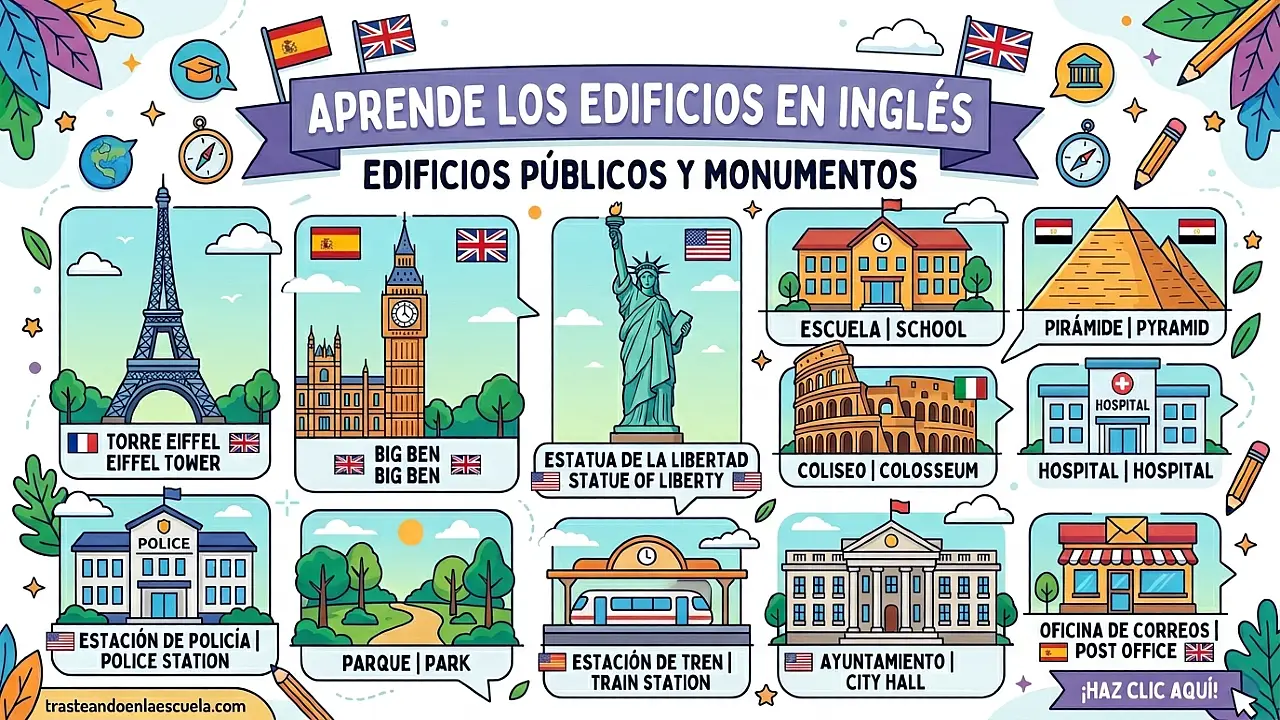
- Buildings: edificios públicos – Ayuntamiento, biblioteca, museo…
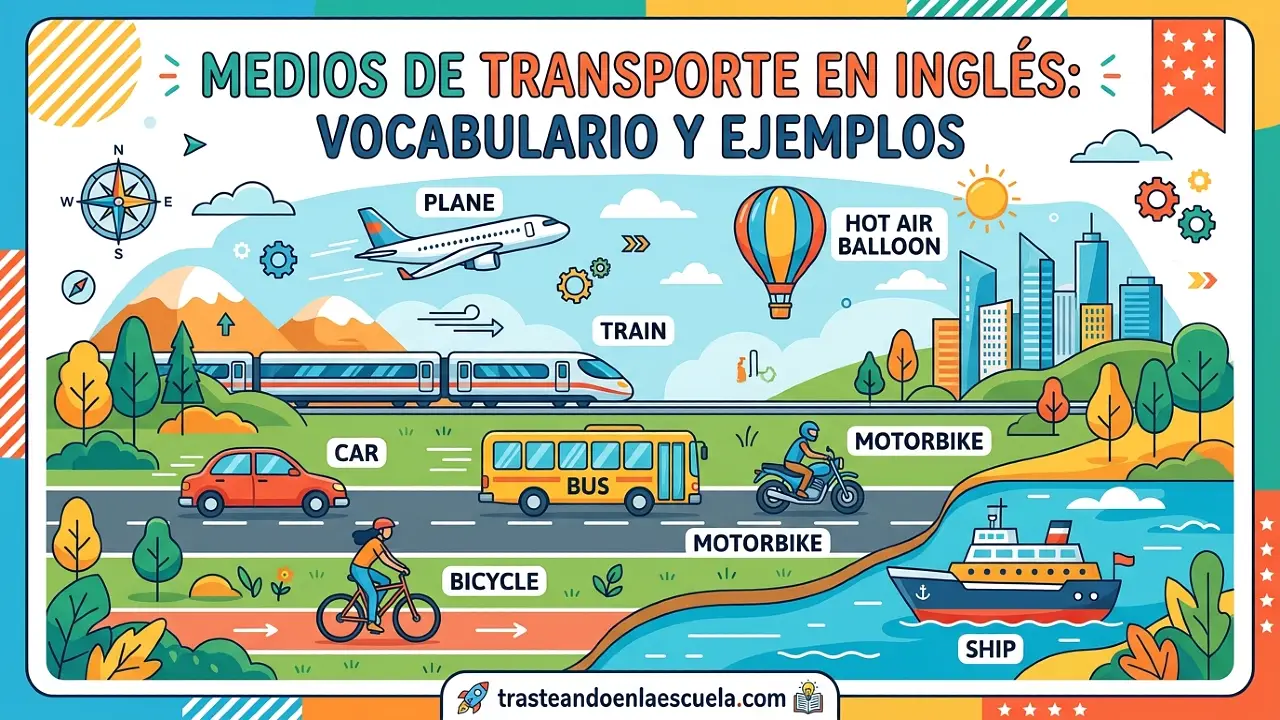
- Transport: medios de transporte – Vocabulario para moverte.
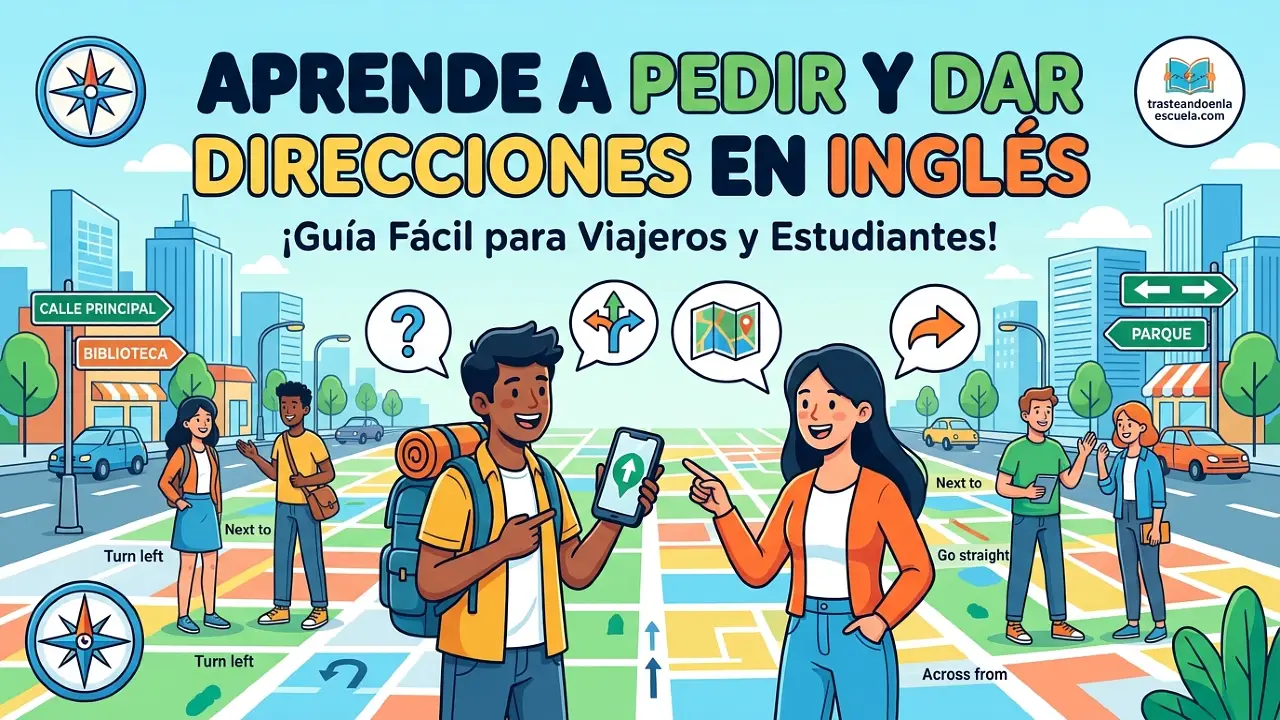
- Directions: direcciones y preposiciones – Cómo preguntar y dar indicaciones.








Publicar comentario