Appliances: todos los electrodomésticos en inglés con ejemplos
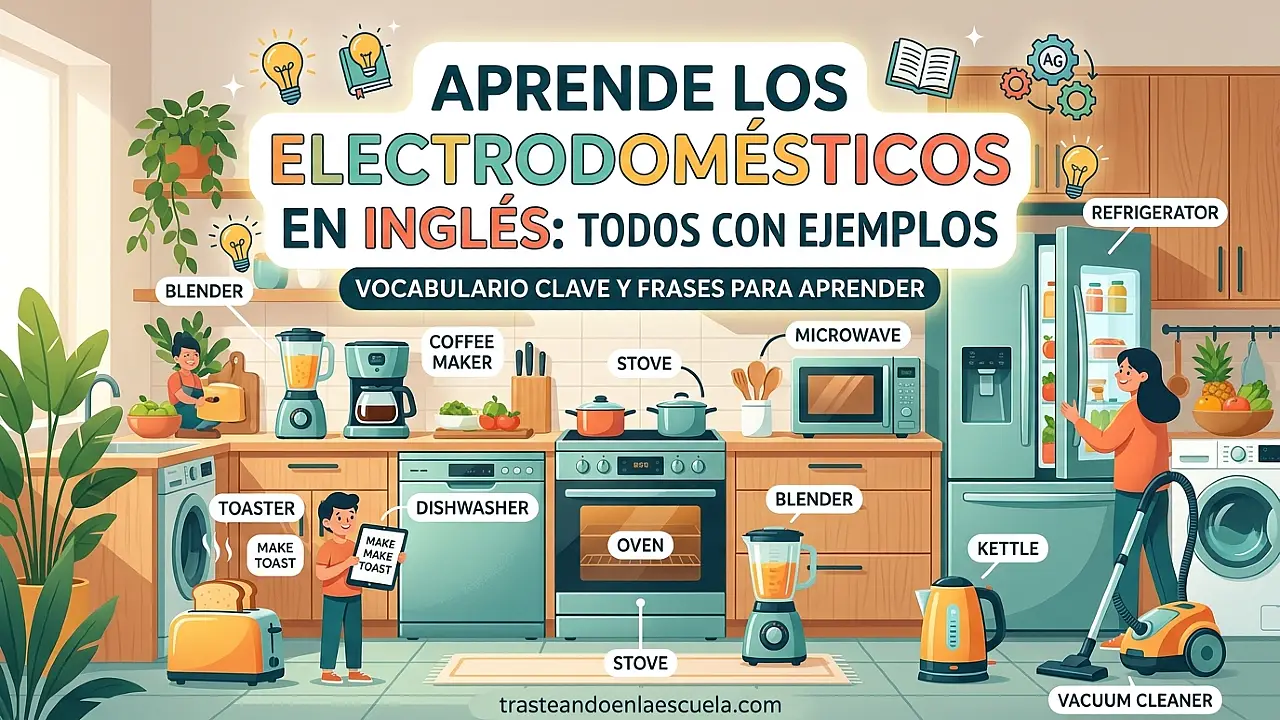
Appliances: todos los electrodomésticos en inglés
¿Necesitas comprar una lavadora en un país angloparlante? ¿O quieres entender el manual de tu nuevo frigorífico? El vocabulario de los electrodomésticos (appliances) es fundamental para el día a día. En esta guía encontrarás más de 40 electrodomésticos organizados por zonas de la casa: cocina, lavandería, limpieza y climatización. Además, aprenderás los verbos clave (plug in, unplug, turn on, load) y las diferencias entre inglés británico y americano.
🎯 En este post aprenderás: Los nombres de los electrodomésticos más comunes (fridge, oven, dishwasher, washing machine, vacuum cleaner, etc.), cómo describir su uso, expresiones útiles para reparaciones o compras, y 5 ejercicios prácticos. No te pierdas el resto del cluster: parts of the house, furniture, bedroom y kitchen.
🔍 ¿Qué son los «appliances»? Grandes vs pequeños
⚡ Clasificación de los electrodomésticos
En inglés, los electrodomésticos se dividen en dos categorías principales:
- Major appliances (white goods) – Electrodomésticos grandes, normalmente de color blanco o acero inoxidable. Ej: refrigerator, washing machine, dishwasher, oven.
- Small appliances – Aparatos pequeños que se usan sobre la encimera o mesa. Ej: toaster, blender, coffee maker, microwave (aunque algunos consideran el microondas como grande).
💡 Dato curioso: En Reino Unido, a los electrodomésticos grandes se les llama white goods (bienes blancos). En Estados Unidos también se usa, pero es más común decir major appliances.
🍳 Electrodomésticos de cocina (Kitchen appliances)
La cocina es la habitación con más electrodomésticos. Aquí tienes los esenciales:
Electrodomésticos grandes (Major kitchen appliances)
| Español | English | Ejemplo |
|---|---|---|
| Nevera / frigorífico | Refrigerator / fridge (US) Fridge / refrigerator (UK) | Put the milk back in the refrigerator. |
| Congelador | Freezer (puede ser independiente o parte de la nevera) | The ice cream is in the freezer. |
| Horno | Oven | Preheat the oven to 180 degrees. |
| Horno microondas | Microwave (oven) | Heat the soup in the microwave. |
| Placa de cocción / vitrocerámica | Stove (US) / Hob (UK) / Cooktop | Don’t touch the stove, it’s hot. |
| Cocina completa (horno + placa) | Range (US) / Cooker (UK) | We need a new gas range for the kitchen. |
| Lavavajillas | Dishwasher | Load the dishwasher after dinner. |
Pequeños electrodomésticos de cocina (Small kitchen appliances)
| Español | English | Ejemplo |
|---|---|---|
| Tostadora | Toaster | Pop the bread in the toaster. |
| Hervidor de agua / tetera eléctrica | Electric kettle | I’ll boil water in the kettle for tea. |
| Cafetera | Coffee maker (US) / Coffee machine (UK) | Set the coffee maker to brew at 7 am. |
| Batidora de vaso | Blender | Make a smoothie with the blender. |
| Batidora de mano | Hand blender / immersion blender | Use the hand blender to puree the soup. |
| Robot de cocina / procesador | Food processor | Chop the vegetables in the food processor. |
| Freidora de aire | Air fryer | Air fryers are healthier than deep fryers. |
| Máquina de pan | Bread maker | Fresh bread from the bread maker smells great. |
Más pequeños electrodomésticos
| Español | English | Ejemplo |
|---|---|---|
| Exprimidor de naranjas | Juicer | Fresh orange juice from the juicer is delicious. |
| Batidora de varillas | Electric mixer / hand mixer | Whip the cream with the electric mixer. |
| Plancha para sándwiches | Sandwich maker / panini press | Make a toasted sandwich with the sandwich maker. |
🧺 Electrodomésticos de lavandería (Laundry appliances)
| Español | English | Ejemplo |
|---|---|---|
| Lavadora | Washing machine / washer (US) | Put the dirty clothes in the washing machine. |
| Secadora | Dryer / tumble dryer (UK) | Don’t put wool sweaters in the dryer. | Lavadora-secadora (todo en uno) | Washer-dryer combo | This washer-dryer combo saves space. |
| Plancha de ropa | Iron | I need to iron this shirt. |
| Tabla de planchar | Ironing board | Set up the ironing board near the outlet. |
🧹 Electrodomésticos de limpieza (Cleaning appliances)
| Español | English | Ejemplo |
|---|---|---|
| Aspiradora | Vacuum cleaner / hoover (UK) | Vacuum the carpet with the vacuum cleaner. |
| Aspiradora robot | Robot vacuum / robovac | The robot vacuum cleans while I’m at work. |
| Fregona eléctrica / aspiradora de agua y ceniza | Wet-dry vacuum / shop vac | Use the wet-dry vacuum to clean the garage. |
| Limpiador a vapor | Steam cleaner | A steam cleaner removes stains without chemicals. |
❄️ Electrodomésticos de climatización y otros (Climate control & others)
| Español | English | Ejemplo |
|---|---|---|
| Aire acondicionado | Air conditioner (AC) | Turn on the air conditioner, it’s too hot. |
| Calefactor / radiador portátil | Heater / space heater | We use a space heater in the bedroom in winter. |
| Ventilador | Fan | A ceiling fan helps circulate air. |
| Deshumidificador | Dehumidifier | A dehumidifier prevents mold in the basement. |
🇺🇸 vs 🇬🇧 Diferencias importantes en electrodomésticos
🇺🇸 American English
- Stove (placa de cocción)
- Range (cocina completa)
- Washer (lavadora)
- Faucet (grifo, pero no es electrodoméstico)
- Garbage disposal (triturador de basura)
🇬🇧 British English
- Hob (placa)
- Cooker (cocina completa)
- Washing machine (lavadora)
- Tap (grifo)
- Food waste disposer
⚙️ Verbos y expresiones útiles con appliances
🔌 Acciones comunes
- Plug in – enchufar. Plug in the toaster before using it.
- Unplug – desenchufar. Unplug the iron when you’re done.
- Turn on / switch on – encender. Turn on the dishwasher after loading it.
- Turn off / switch off – apagar. Don’t forget to turn off the oven.
- Load – cargar (el lavavajillas o lavadora). Load the washing machine with detergent.
- Unload – vaciar. Unload the dishwasher and put the dishes away.
- Set / program – programar. Set the coffee maker to start at 6 AM.
- Repair / fix – reparar. We need to repair the refrigerator, it’s not cooling.
🧠 Frases hechas y ejemplos en contexto
- This dishwasher is energy-efficient. (Este lavavajillas es eficiente energéticamente.)
- The fridge is making a strange noise. (La nevera hace un ruido extraño.)
- I need to defrost the freezer. (Necesito descongelar el congelador.)
- Don’t overload the washing machine. (No sobrecargues la lavadora.)
- The microwave has a defrost setting. (El microondas tiene una función de descongelación.)
- We have a built-in oven and a separate induction hob. (Tenemos un horno empotrado y una placa de inducción separada.)
📝 5 ejercicios prácticos con electrodomésticos en inglés
Ejercicio 1: Traduce al inglés los siguientes electrodomésticos
- Lavavajillas
- Freidora de aire
- Aspiradora robot
- Plancha de ropa
- Hervidor eléctrico
- Congelador
- Secadora
- Batidora de vaso
✅ Ver soluciones
- Dishwasher
- Air fryer
- Robot vacuum / robovac
- Iron
- Electric kettle
- Freezer
- Dryer / tumble dryer
- Blender
Ejercicio 2: Elige el verbo correcto (plug in, unplug, load, turn on, set)
- _______ the washing machine with clothes and detergent.
- _______ the coffee maker to brew at 7:30.
- _______ the vacuum cleaner before using it.
- _______ the iron after you finish ironing.
- _______ the dishwasher and close the door.
✅ Ver soluciones
- Load
- Set
- Plug in
- Unplug
- Turn on / Switch on
Ejercicio 3: Corrige los errores en estas frases sobre electrodomésticos
- Can you put the milk in the freezer? (No, debería ser en la nevera)
- I need to buy a new cloth washer. (error común)
- The dish washer is not draining.
- Don’t forget to unplug the toaster before cleaning it.
- We have a gas stove and an electric oven.
✅ Ver soluciones
- Can you put the milk in the refrigerator? (freezer es congelador, demasiado frío para la leche)
- I need to buy a new washing machine. (cloth washer no existe)
- Dishwasher is correct, pero es una palabra: dishwasher, no dish washer.
- Esta frase es correcta. (No error)
- Esta frase es correcta. (stove = placa en US, oven aparte)
Ejercicio 4: Completa las oraciones con la palabra adecuada (air fryer, kettle, microwave, toaster, blender)
- I use the _______ to make smoothies.
- _______ a slice of bread for breakfast.
- Boil water in the _______ for tea.
- Reheat leftovers in the _______.
- Cook crispy fries with less oil using an _______.
✅ Ver soluciones
- blender
- Toaster
- kettle
- microwave
- air fryer
Ejercicio 5: Describe tu cocina o lavadero usando al menos 5 electrodomésticos y 3 verbos de acción (plug in, load, turn on, etc.).
✅ Ver ejemplo de respuesta
«In my kitchen, I have a refrigerator, an oven with a gas stove, a microwave, a dishwasher, and a toaster. Every morning, I plug in the kettle to boil water for tea. After breakfast, I load the dishwasher with the dirty dishes and turn it on. I also use the microwave to reheat my lunch. The toaster is next to the coffee maker.»
🌍 Aplicaciones reales del vocabulario de electrodomésticos
🛒 Comprar electrodomésticos online
Frases útiles: «What is the energy rating of this refrigerator?» / «Does this washing machine have a delay start function?» / «I’m looking for a compact dishwasher for a small kitchen.»
🔧 Reparaciones y servicio técnico
«The dryer is not heating up.» / «My dishwasher is leaking water.» / «The oven temperature is inaccurate.» / «Can you send a technician to fix the refrigerator?»
📖 Leer manuales de instrucciones
Expresiones comunes en manuales: «Before first use, remove all packaging.» / «Do not immerse the appliance in water.» / «Clean the filter regularly.»
📖 Glosario adicional de partes y accesorios
| Palabra | Significado |
|---|---|
| Filter | Filtro (de lavadora, aspiradora, campana) |
| Drum | Tambor de la lavadora o secadora |
| Heating element | Resistencia (horno, secadora) |
| Control panel | Panel de control |
| Timer | Temporizador |
| Child lock | Bloqueo de seguridad para niños |
📚 Serie completa: la casa en inglés
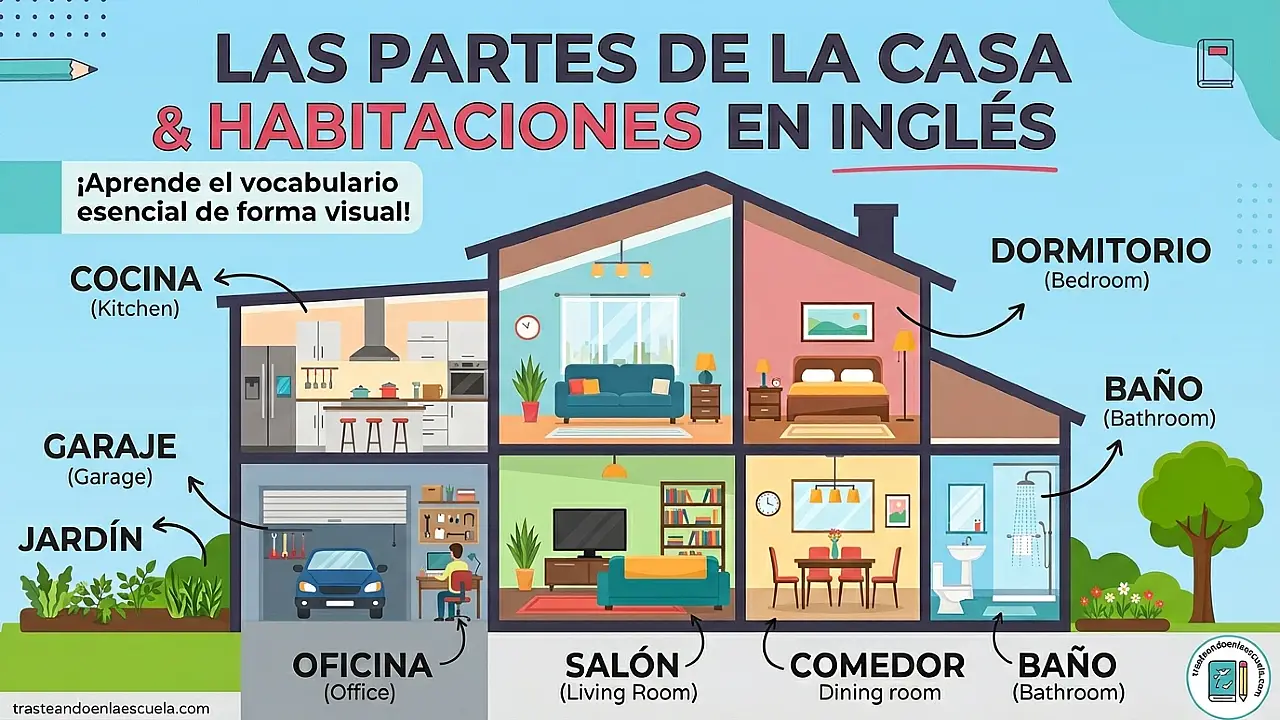
- Parts of the house – Habitaciones y zonas de la casa.
- Furniture – Muebles en inglés.
- Appliances – ¡Estás aquí! Electrodomésticos.
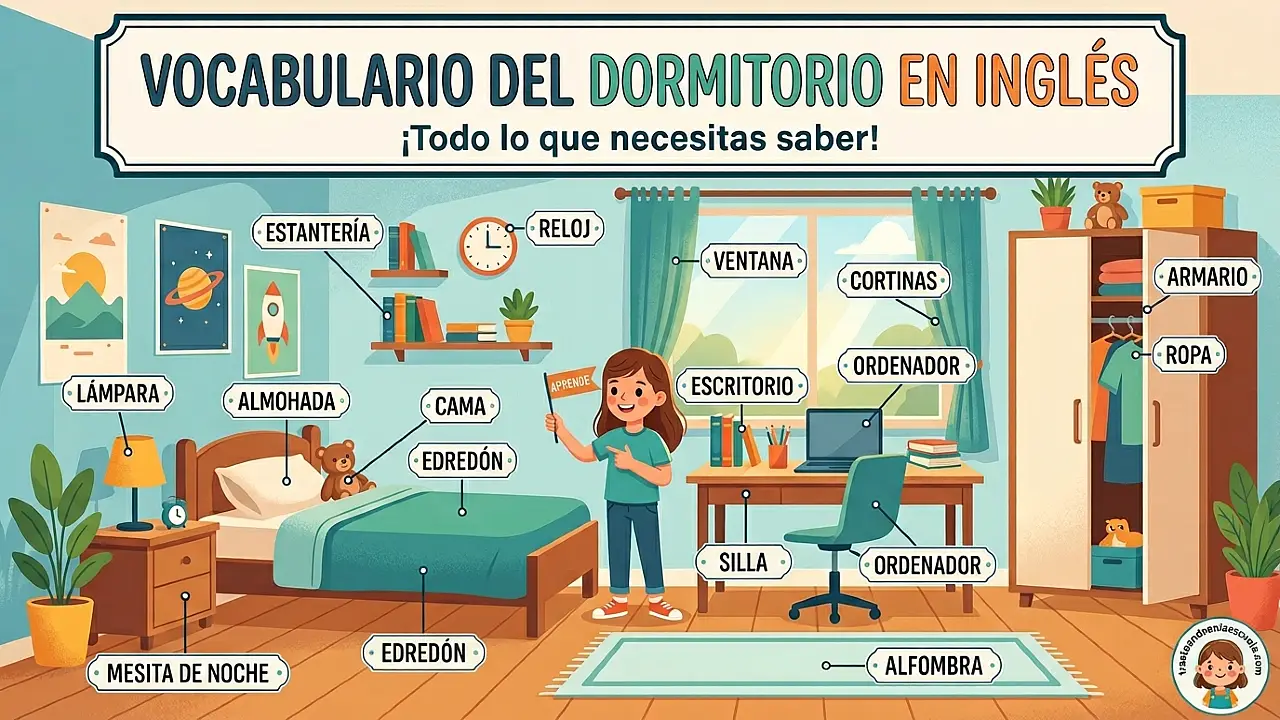
- Bedroom – Vocabulario del dormitorio.
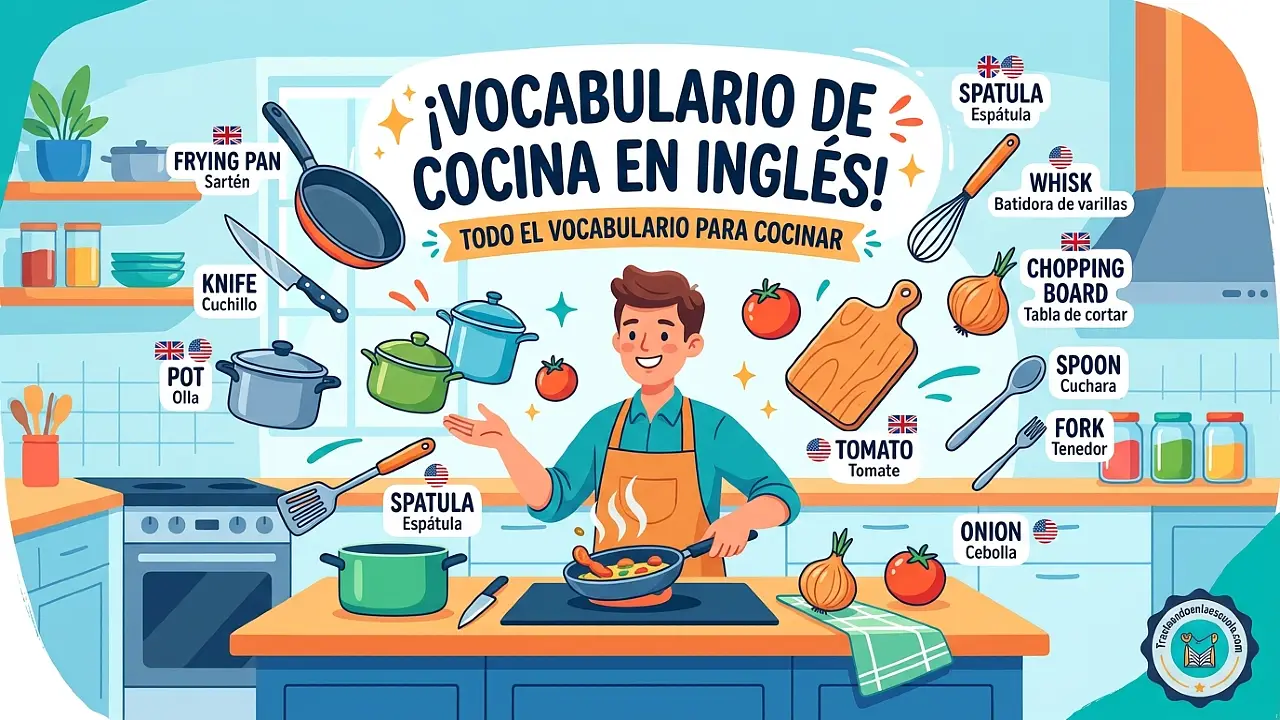
- Kitchen – Vocabulario de la cocina.
🏆 Reto final: Haz una lista de todos los electrodomésticos que tienes en tu cocina y lavadero. Escribe una oración en inglés para cada uno diciendo para qué lo usas. Ejemplo: «I use the blender to make smoothies every morning.» Luego, practica describiendo cómo se usa uno de ellos paso a paso (primero enchufar, luego cargar, luego encender…).











Publicar comentario